

The best books of 2025
Literary refuge in a time of genocide, war and general dystopia. Serious readers were treated to some outstanding work in 2025. Neil D.A. Stewart gives his pick of fiction and non-fiction, and the best of the year’s paperbacks
Literary refuge in a time of genocide, war and general dystopia. Serious readers were treated to some outstanding work in 2025. Neil D.A. Stewart gives his pick of fiction and non-fiction, and the best of the year’s paperbacks
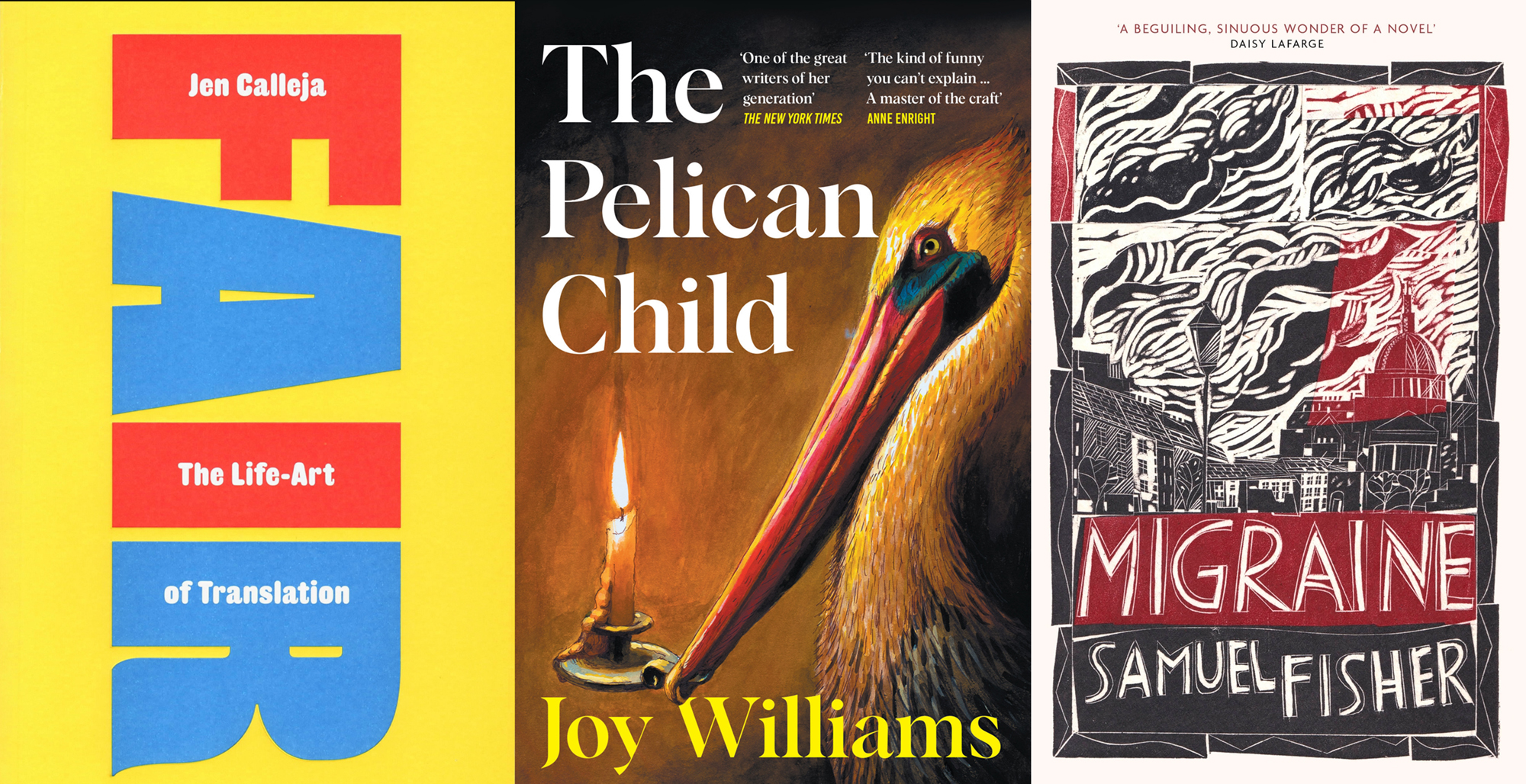
To begin at the end: one of 2025’s biggest literary treats arrived, unfussily, in the final month of the year. If I ruled the (books) world the publication of a new Joy Williams would be occasion for a national holiday and some kind of fireworks display. The twelve stories collected in The Pelican Child (Tuskar Rock/Knopf Doubleday) are the work of a writer like no other: they are knotty, odd, their setting, no matter how urban, always a kind of infinite desert. They’re almost mystical in their strangeness: slip in tense will, in a single line, cast one of these stories of mysterious journeys and ambiguous inheritances in a completely different light. As in her magisterial 2023 eco-dystopia Harrow, Williams is writing from a place of righteous fury: it’s too late, in her vision, to save the world, and there’s no time to waste in being platitudinous about mankind’s wilful, unrepentant devastation of the world that supports them. And yet – this is a laugh-out-loud funny book, too, especially for nihilists. Maybe the greatest writer of short stories (of sentences generally) currently working, Williams should be so much more widely known than she is. IYKYK, as they say, and I wish more readers did.
The most interesting contenders for this year’s Booker Prize were its most experimental
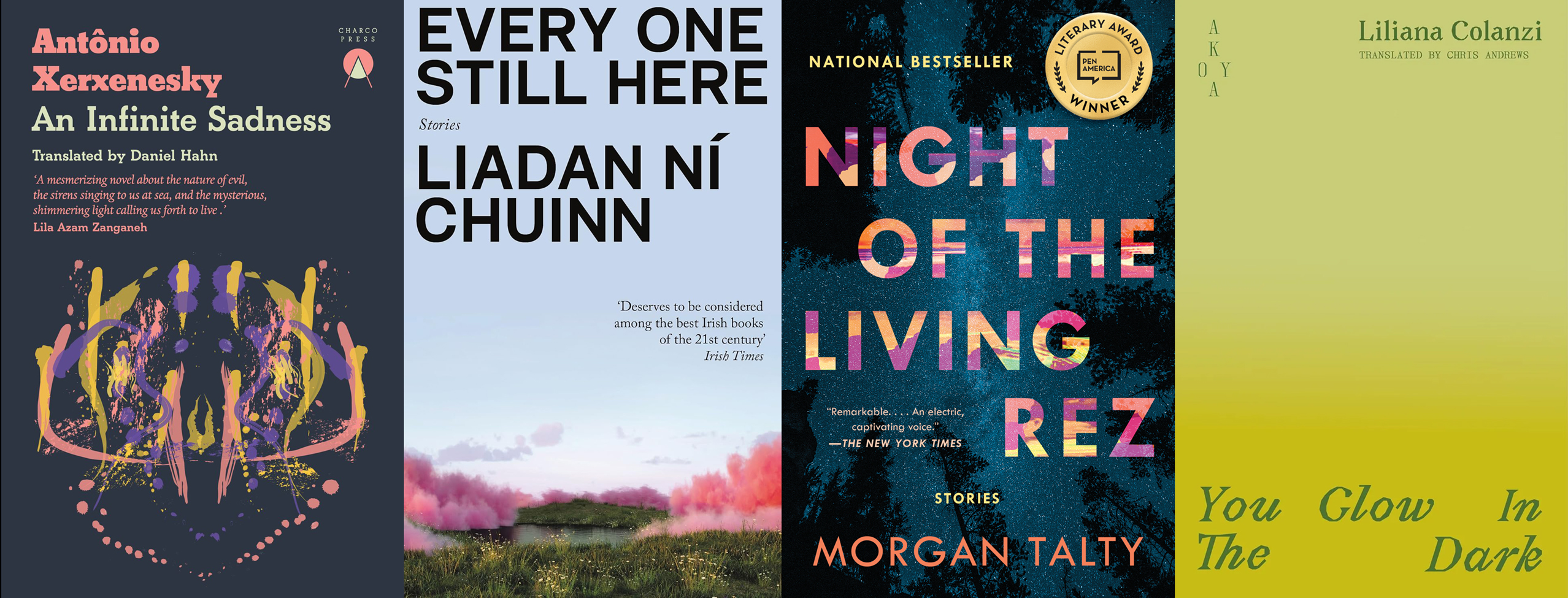
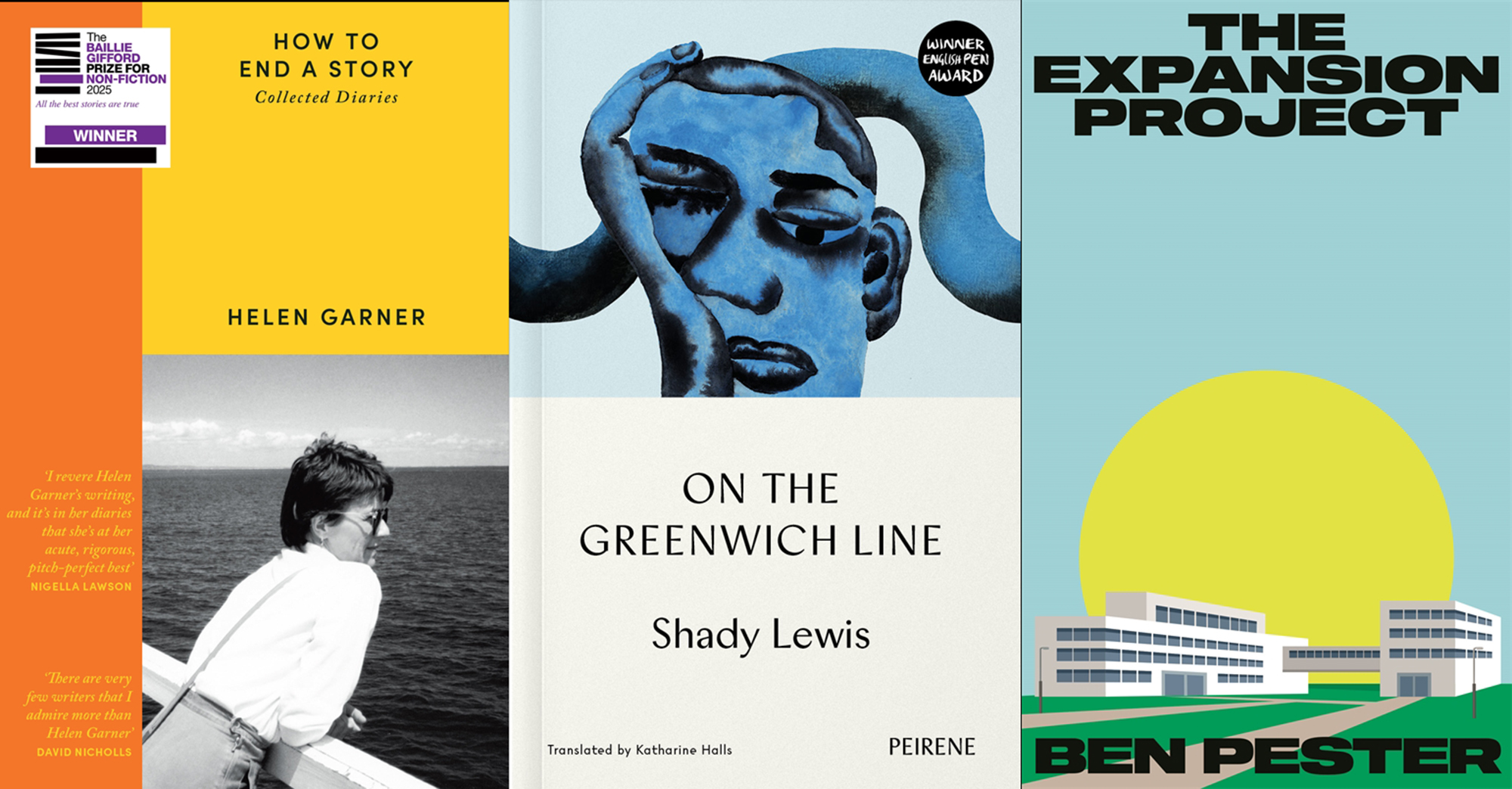
2025 was something of a vintage year for weird fiction. Bolivian author Liliana Colanzi bases the stories in You Glow in the Dark (Akoya/New Directions, trans. Chris Andrews) on a real-life tragedy in which radioactive material, stolen from an oncology clinic in the Brazilian town of Goiânia, was distributed among residents, among them children so enthralled by the sparkling dust that they spread it on their limbs. Featuring monsters, visitations, promises and curses, this is a brilliantly unnerving collection. Closer to home, Shady Lewis presents a panoptic vision of 2020s London in On the Greenwich Line (Pereine, trans. Katharine Halls), from the perspective of a social worker who goes above and beyond in their effort to help a friend battle bureaucracy and arrange a funeral for a Syrian refugee. Underreported and underappreciated lives bloom in this mordantly funny, eye-opening novel.
Books of the year 2025
The most interesting contenders for this year’s Booker Prize were its most experimental – and the winner, David Szalay’s Flesh (Cape/Scribner), a study in dissociation and male interiority, was an agreeably leftfield choice over some of the more traditionally Bookerish shortlistees. Of these, my favourite was Audition (Fern Press/Riverhead), in which Katie Kitamura presents two apparently irreconcilable stories of an actress and a younger man: in one he is a stranger declaring himself her son, to her bemusement and horror; in the second, they are and have always been part of a family. There are clues in the title and the protagonist’s profession, but novel’s steadfast refusal to explain itself its great strength. In her longlisted debut Endling (Virago/Doubleday) Maria Reva goes still more rewardingly experimental. What begins as a compelling heist/road-trip comedy – as a Ukrainian “bride-finder”, tiring of Westerners’ clichéd conception of her people, kidnaps a bunch of European sex tourists in an effort to teach the patriarchy a lesson – takes a wild turn as Yeva’s camper-van of abductees turns out to be heading to Kherson, also the target of Russian missiles as it begins its invasion. The novel is transformed by their impact: its laconic tone vanishes and suddenly seems to be unfolding in real time. Although Endling has maybe one element too many, its proliferating metafictions are wise, funny and hair-raising.
The art world – or industry – is notoriously unsatirisable
More experimentation in C.D. Rose’s We Live Here Now (Melville House), a set of interlocking stories concerning a reclusive artist and her even more mysterious and possible reality-altering artwork. It’s fun to spot the links among these stories, with their recurring characters and suddenly significant details, but even more satisfying when Rose uses the device of a private view to bring these characters and stories into a single place and time. The art world – or industry – is notoriously unsatirisable, but We Live Here Now shows it still has room for the uncanny.
A few years ago I devoured Ben Pester’s collection of short stories Am I In the Right Place?, and I was intrigued to see how his idiosyncratic mix of the mundane and the surreal would play in longer form. His debut novel The Expansion Project (Granta) seems at first to be made up of connecting stories, taking the form of reportage, workplace interviews and stilted conversations among colleagues in a business park that has the familiar hallmarks of the capital-W Weird setting: corridors that don’t seem to go anywhere, a mysterious mist engulfing the grounds. Hapless Tom is convinced that his daughter has gone missing on a “Bring your child to work” day, in spite of all the contradicting evidence (including his daughter’s own account of the day), and as his desperate and apparently groundless investigation continues, we realise that the project of the title is something much more invasive than just a physical expansion. This is a late-capitalist nightmare scenario, and Pester and the reader have grim fun exploring the novel’s impossible, all-too-plausible world.
Books of the year 2025
Another abduction with unintended consequences in The National Telepathy from Argentina’s Roque Larraquy (Charco Press, trans. Frank Wynne). Set in 1933, it begins with the kidnapping of 19 Indigenous Peruvians who are transported to Argentina to appear in the country’s “Ethnological Park”, the brainchild of rubber-plantation oligarch Amado Dam. Horrific enough – and that’s before the discovery, among the Peruvians’ possessions, of an artefact they are protective and terrified of: a sloth which gives anyone who possesses it a kind of psychic power that is also deeply, ruinously erotic. Told through manuscripts and documentation, this is a novel about power, repression and the terror that connection and empathy fosters in the fascist mind, and which it will do anything to suppress.
Also from the reliably excellent Charco Press came the most impressive novel I read this year, Antônio Xerxenesky’s An Infinite Sadness (tr. Daniel Hahn). It’s set in the aftermath of the Second World War, when the world has been broken wide open: not emptied out, but filled with more than ever seemed possible. In a Swiss hospital, psychiatrist Nicholas is doing his best to help his patients while battling his own shattered history; his wife, a physicist, is researching into dark matter, one of the contemporary scientific discoveries making the cosmos itself more, not less, mysterious. There’s more than a hint of The Magic Mountain here, not just in the Alpine sanitarium setting, but in Brazilian novelist Xerxenesky’s juxtaposing of different theories by which the strangeness of the world might be explained and understood. Like Mann’s masterpiece, too, this is a sumptuously written novel of ideas, contemplative yet propulsive, and deeply human.
The novel brings us news, as one of my teachers was fond of reminding us, and Morgan Talty’s Night of the Living Rez (& Other Stories/Tin House) was an eye-opener. This novel-in-stories describing the lives of Indigenous youths on a reservation in Maine, is perfectly weighted between the familiar misadventures of teens at loose ends and the context of the very different pressures under which these lives are lived. A less fraught upbringing, in 1950s Finland, in Lowest Common Denominator, the first volume of Pirkko Saisio’s stylishly fictionalised coming-of-age memoirs (Penguin, trans. Mia Spangenberg), in which the young Pirkko describes growing up and apart from her family. I can’t wait for the remaining volumes. The rave-previews a book receives can sometimes be more unhelpful than boosting, but Liadan Ní Chuinn’s Every One Still Here (Granta/FSG Originals) deserved the plaudits: these stories, set in Northern Ireland, are fuelled by the history of the region and the struggle to come to terms with the past, when so much lived experience is overwritten by sanitised official histories. News brought fresh to us, from a talented author who has lived these stories.
As always, Civilian has to declare an interest in recommending books by friends of the website, which this year included Samuel Fisher’s excellent Migraine (Corsair, also this author’s publisher); the dreamy Lush by Rochelle Dowden-Lord (Serpents Tail/Bloomsbury US); Nussaibah Younis’s powerhouse debut Fundamentally (W&N/Tiny Reparations), and one of the year’s biggest followups, Let the Bad Times Roll, from Alice Slater (Hodder & Stoughton); Róisín Lanigan’s housing-ladder horror story I Want to Go Home But I’m Already There (Fig Tree); the clever, moving Pig by Matilde Pratesi (Corsair); Fernando Sdrigotti’s deft short stories A Foreign Country is the Past (Influx); Seth Insua’s exploration of rural lives in collision Human, Animal (Verve); and the latest Scholastic title for younger readers by Civilian’s own M.C. Ross.
Books of the year 2025
Most of my non-fiction reading this year was research of one sort of another, but I made time for Bad Friend (Faber/Celadon), in which Tiffany Watt Smith examines various 20th-century friendships between and among women (and sometimes their fallings-out) as she attempts to understand why a best friendship of her own has faltered. Love gets the headlines, but friendship, which can pre-date and run deeper than romance, is often sidelined, as this book shows – the account of Cookie Mueller’s best friend attending her deathbed is tremendously moving. I also enjoyed translator extraordinaire Jen Calleja’s Fair (Prototype), a playful tour de force with the serious aim of highlighting how translators, and other arts-sector professionals, are too easily overlooked, underpaid and taken for granted.
In paperback, I came late to some brilliant books of the previous year. Yasmin Zaher’s The Coin (Footprint/Catapult) shows the disintegration of a wealthy Palestinian expat in New York as the effects of a life lived under a threat of violence catch up with her. Each new novel from Charlotte Wood starts out somewhere very different from her last: in Stone Yard Devotional (Sceptre/Riverhead), it’s with a woman escaping urban Sydney for a rural religious community, then, despite having no particular religious feeling, deciding to stay far longer than she ever intended. What unites all Wood’s projects are her psychological acuity and her crystalline prose. There’s no higher praise, really, than to say her sentences remind me of Helen Garner’s – on whom, their republication in a single volume (at, albeit, an unwieldy 800 pages) allows me to once again recommend How to End a Story: Collected Diaries (W&N/Pantheon). This should be on the bedside of every writer and every reader, as well as everyone who has ever been married or divorced, or wanted to do either – a book of endless insights, understandings, skewering descriptions, regrets and pleasures. Every page contains a gem.
I picked up a copy of Joe Brainard’s I Remember (Granary Books) in New York, unaware that Daunt Books were poised to republish it in the UK. Originally issued in 1970, this is one of those books that is simple to outline (a series of reminiscences, shorn of context, some as long as a paragraph, some a few words, some universal and some deeply personal, all starting “I remember”) but whose impact – and the sense of full personhood you apprehend through these fragments – considerable. A full life of a problematic subject in Sue Prideaux’s exhaustive and endlessly compelling biography of Paul Gauguin, Wild Thing (Faber/W.W. Norton), which renders the artist in all his braggadocio, vulnerability and misbehaviour.
I started hunting down books on utopias, outsiderism and stigma
There has been a crop of memoirs in recent years describing unusual childhoods in communes, cults and hippie enclaves. Susanna Crossman’s Home is Where We Start (Penguin) stands out for not simply chronicling her youth in a utopian community but for her ability to look back and unpick not just the facts around this and similar utopian projects (and how the concept rather tailed out, politically) but, as a trained psychoanalyst, the minds that dreamed them up. Brilliant in itself, it’s one of those books which sends the reader off on journeys of further exploration – I started hunting down books on utopias, outsiderism and stigma. A lodestone of a book.
Looking ahead to the new year, I’m thrilled to see a new volume of David Kynaston’s ongoing social history of postwar Britain, which reaches 1965–66 in Deep into the Sixties (Bloomsbury, September). I was thrilled to blurb the brilliant new novel from David Annand, The Dice Was Loaded from the Start (Corsair, March), which dramatises the clash of generations on one singular London street in a smart, skewering comedy of manners. And I’m excited that Penguin Classics is publishing UK editions of Robert Plunket’s two novels. 1992’s Love Junkie, in which serially deluded socialite Mimi Smithers becomes the secretary of her obviously gay best friend in the hope he’ll fall for her, is the funniest book I read in 2025 – and it’ll be the funniest book you’ll read in 2026. C
Neil D.A. Stewart is the author of the novel Test Kitchen (Corsair).
Civilian recommends independent UK retailers BookBar, Burley Fisher Books, The Common Press, Ink84 Books, Libreria and Pages of Hackney (London), The Book Hive (Norwich), Mr B’s Emporium (Bath) and Golden Hare (Edinburgh)