


HYLL, Charingworth | Do nothing or nothing to do?
Charingworth Manor has been reborn as HYLL. Douglas Blyde enjoys the look but finds it lacking a little in substance.
Charingworth Manor has been reborn as HYLL. Douglas Blyde enjoys the look but finds it lacking a little in substance.
Its pre-arrival mantra, “Do Nothing”, sounded less like permission than advance warning. After a 110-mile drive from south-west London with my wife and our inquisitive eight-year-old daughter, Lyra, I found the proposition unsettling. HYLL’s social media had not helped. One post praised ‘a large stone balanced on another stone’ for achieving absolutely nothing. Another urged guests to let the lawn ‘do its thing’. Inactivity had acquired copywriters, content schedules and a marketing department.
A hotel art-directed more thoroughly than operated
With temperatures nearing 30°C, nearby hotels offered indoor pools. HYLL had removed the one inherited from Charingworth Manor for The Bower, a weddings and private-dining venue due in 2027. At such temperatures, chlorine acquires moral authority. We postponed arrival and went instead to Hidcote.
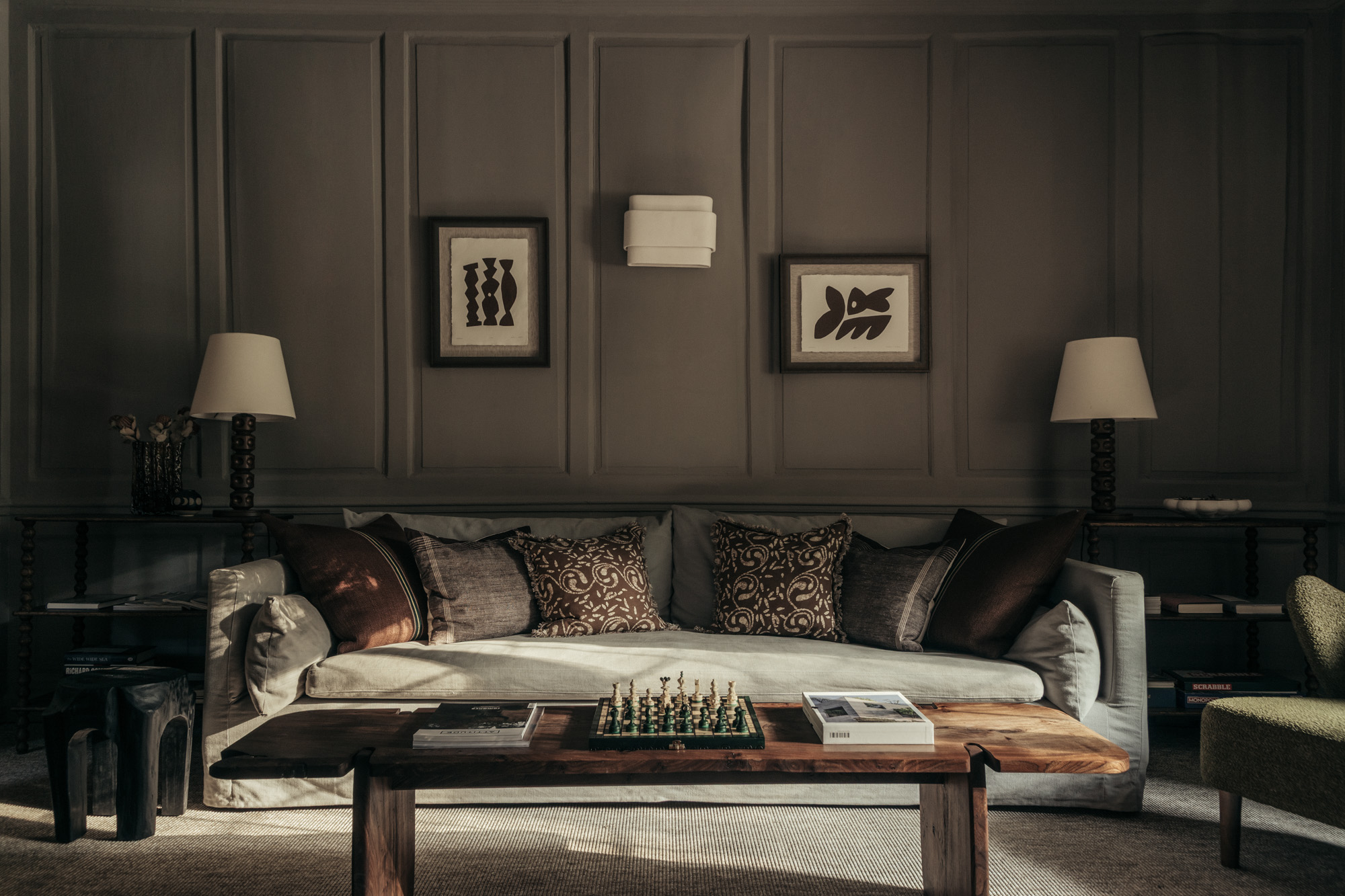
The lounge at HYLL
Lawrence Johnston’s Arts and Crafts garden proceeds through clipped hedges, exuberant borders and composed outdoor rooms. Almost every view carries evidence of a decision. HYLL offers the counterargument. Its 60 acres recede into meadow, woodland edge and pasture. Red kites wheel overhead, antique aircraft describe leisurely circuits and chiffchaffs repeat their names. Hidcote edits nature. HYLL lets it finish the sentence.
The drive rises through meadow towards the manor. Halfway up stands Adrian Gray’s immense balanced-stone sculpture, as though the Instagram caption had acquired three dimensions. One light trained upon it was crooked, so I straightened it. Apt.
Then came the dank breath of nearby water and the first built structure guests see: construction works. Leaning banners attempted concealment, while a door stood open at a hotel welcoming children. The tennis court was unavailable too, filled with insulation and building materials. Guests arrive without pool or court, but with an unusually complete view of what is replacing them. A hosepipe lay across the terrace all afternoon and remained there the next morning.
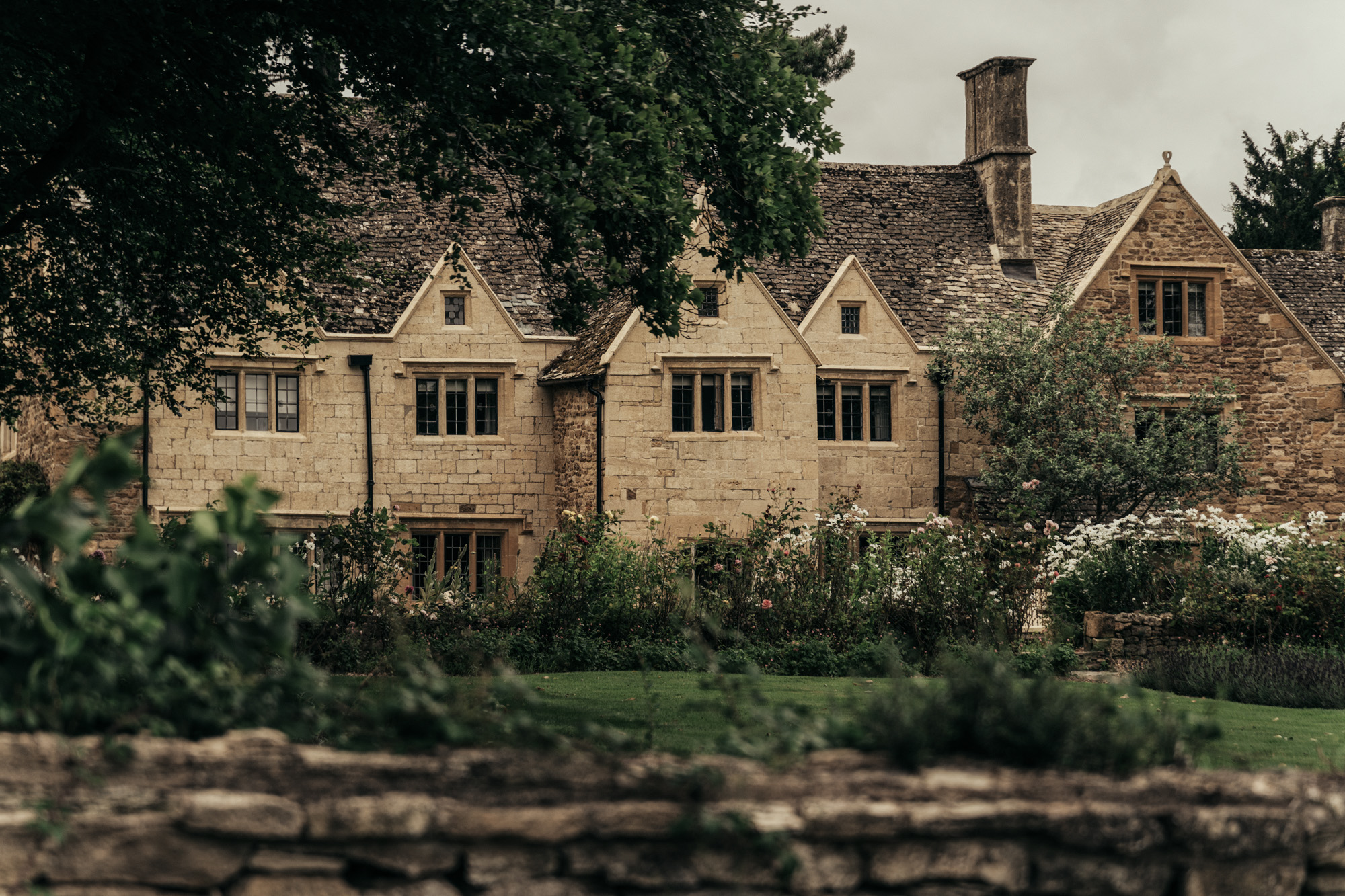
HYLL
Check-in happens via a woman leaning awkwardly over a narrow shelf, an early example of an attractive conception insufficiently considered in use.
The former Charingworth Manor has been pared back. Hunting prints and ancestral bric-a-brac have gone; neutral tones prevail. Every cushion appears to have signed a neutrality pact. Owner Paul Baker, often photographed in bright jackets and patterned scarves, displays greater chromatic appetite than his hotel.
Baker and Sarah Ramsbottom are long-time friends and business partners. HYLL is their first hotel together and the first from Madfabulous Hotels. Baker, a craft baker by training, founded St Pierre Groupe before selling the brioche business to Grupo Bimbo. From brioche to bedrooms is not the obvious progression, although both depend upon proving.
HYLL feels conceived by people with strong ideas about appearance and mood, but less familiarity with the unnoticed mechanics through which a good hotel earns trust. Loan boots, board games, a listening room, sun cream and dog treats are supplied. In the garden, a beanbag game defeated all three of us. It may have been recreation, or an aptitude test.
A Clover Club was as sweet as Disneyland
The lounges are the principal success – generous rooms in which to read, talk or lose an hour. Contemporary art adds energy, though a picture should trust its viewer rather than arrive carrying its own press release. Elsewhere, shelves appeared filled by the linear metre, while somebody had gone mad with Fantastic Man and design porn.
HYLL’s interest in time has a literary foundation. While staying at Charingworth Manor, T.S. Eliot visited nearby Burnt Norton with Emily Hale in 1934. The visit fed Burnt Norton, later the first of Four Quartets. HYLL has therefore removed clocks, an intelligent link between the building’s history and its present philosophy.
Before our visit, the PR team asked about preferred reading. Lyra likes Shakespeare, opera and mild horror. My wife prefers Somerset Maugham. I admitted to chef biographies, lowering the family’s literary average in one sentence. Borzoi Books supplied Bourdain, Maugham and four Shakespeare tragedies – one of HYLL’s most personal gestures.
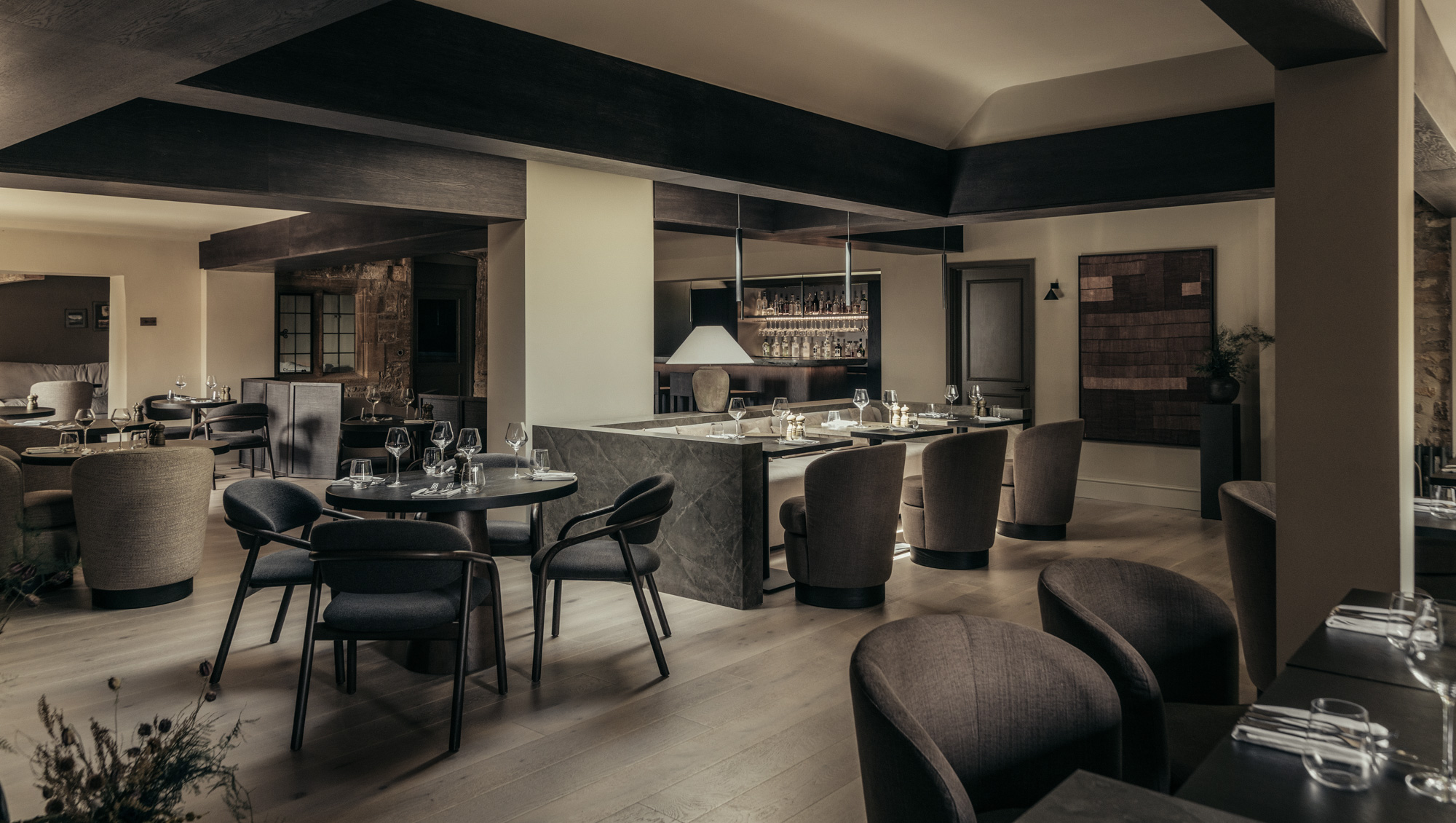
The restaurant at HYLL
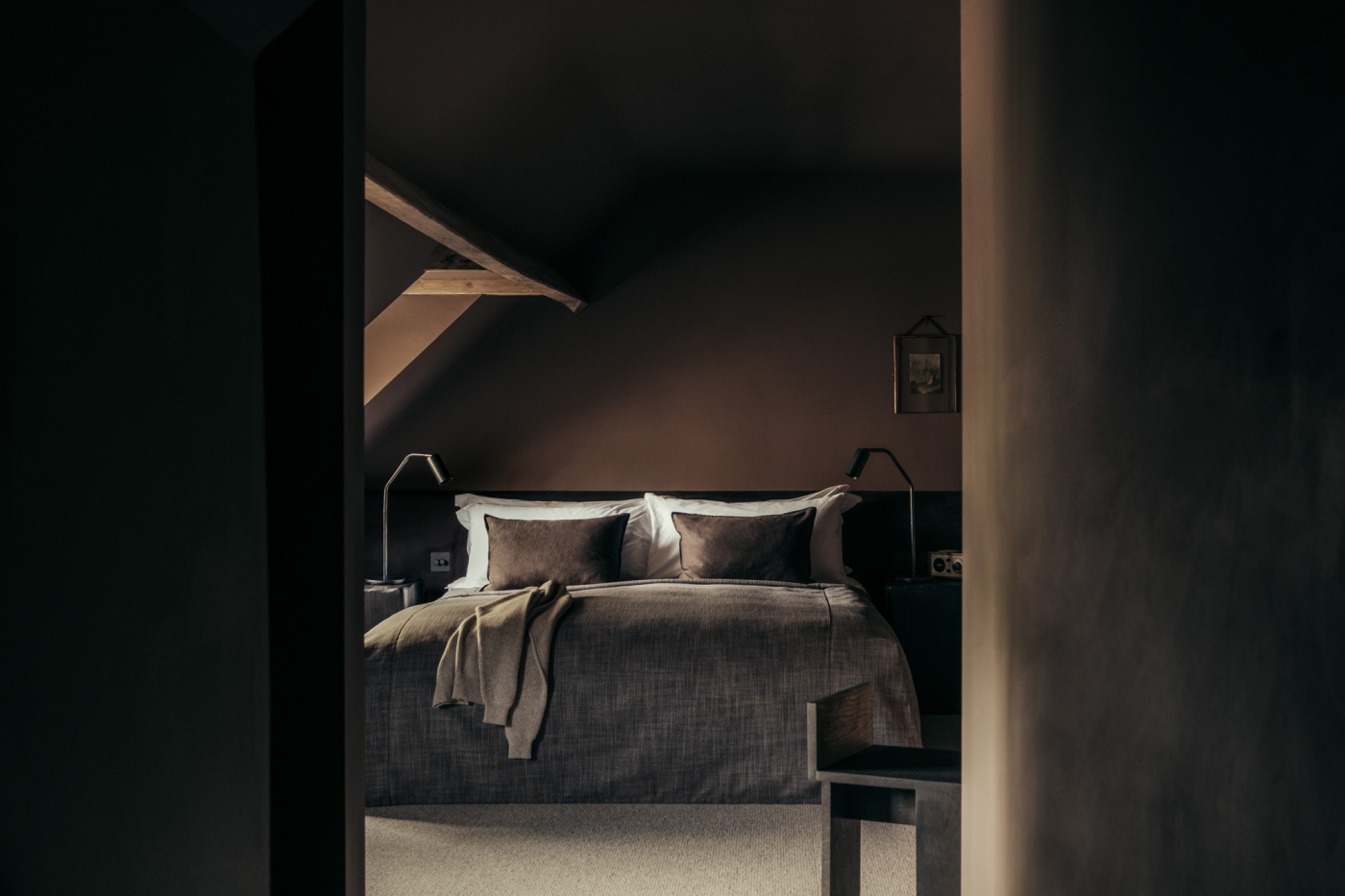
The books sat above a minibar containing no water. Nor did a welcome drink await us. The mattress had developed a pronounced central dip despite the recent renovation. The room was oppressively warm, without air conditioning. We opened leaded windows veiled in cobwebs. Rates edge towards £500 a night, yet there was no turndown and not even a box of tissues. Towels bearing the former hotel’s ‘CM’ initials attempted to accompany me home fibre by fibre.
Each fault sounds modest alone. Together, they suggest a hotel art-directed more thoroughly than operated.
Head chef David Kelman has an impressive CV, which made dinner more perplexing. Ingredients were good; execution was not. Roast beets with ajo blanco worked, although the portion was slight. Lamb was overcooked. Octopus had travelled beyond tenderness into pulp. Padrón peppers avoided blistering with remarkable discipline. Broccoli described as chargrilled bore little evidence of flame. The kitchen had confused heat with fire. We stopped before pudding.
Breakfast supplied an eloquent rebuttal. Gentleman’s Relish toast with scrambled eggs was excellent, while local honey was apt. Yet our coffee reached the only other occupied table.
The drinks were no easier to understand. A Bloody Mary carried the unmistakable tang of packeted lime juice. A Clover Club was as sweet as Disneyland. The wine list omitted vintages, gave little recognition to nearby English vineyards and served reds by the glass warm.
The problem is not the missing pool, nor the invitation to do less. It is the difference between being left alone and being left unattended
More troubling was the absence of a visible managerial centre. Nobody appeared to bind the operation together. Billing, by contrast, soon found its stride. We received two reminders – by email and WhatsApp – punctuated by a visit to the bedroom. The friendliest resident was Smoky, a neighbour’s black cat.
And yet HYLL begins to seduce. By evening, the works receded. The lounges drew us in. The books felt personal. The meadow grew more persuasive as the heat softened.
There is intelligence in HYLL’s rejection of compulsory wellness and organised merriment. A country hotel which trusts guests to read, eat, walk and listen is an attractive proposition.
The problem is not the missing pool, nor the invitation to do less. It is the difference between being left alone and being left unattended. HYLL has an unusual idea, absorbing communal rooms and moments in which the enterprise makes emotional sense. What it lacks is the seasoned hotelier’s eye which catches the dipping mattress, shedding towels, warm wine, overdone lamb, stranded hosepipe and misdirected coffee before the guest assembles them into an argument.
HYLL may yet become one of England’s most interesting new country hotels. The idea is good. The execution has not caught up with it. For now, it has opened before it is ready.
“Do Nothing” may be a guest privilege. It cannot be a management policy. C
HYLL
Campden Road, Charingworth
GL55 6NS; 01386 593555; hyllhotel.com
Hidcote Garden – nationaltrust.org.uk
Follow Douglas @douglasblyde