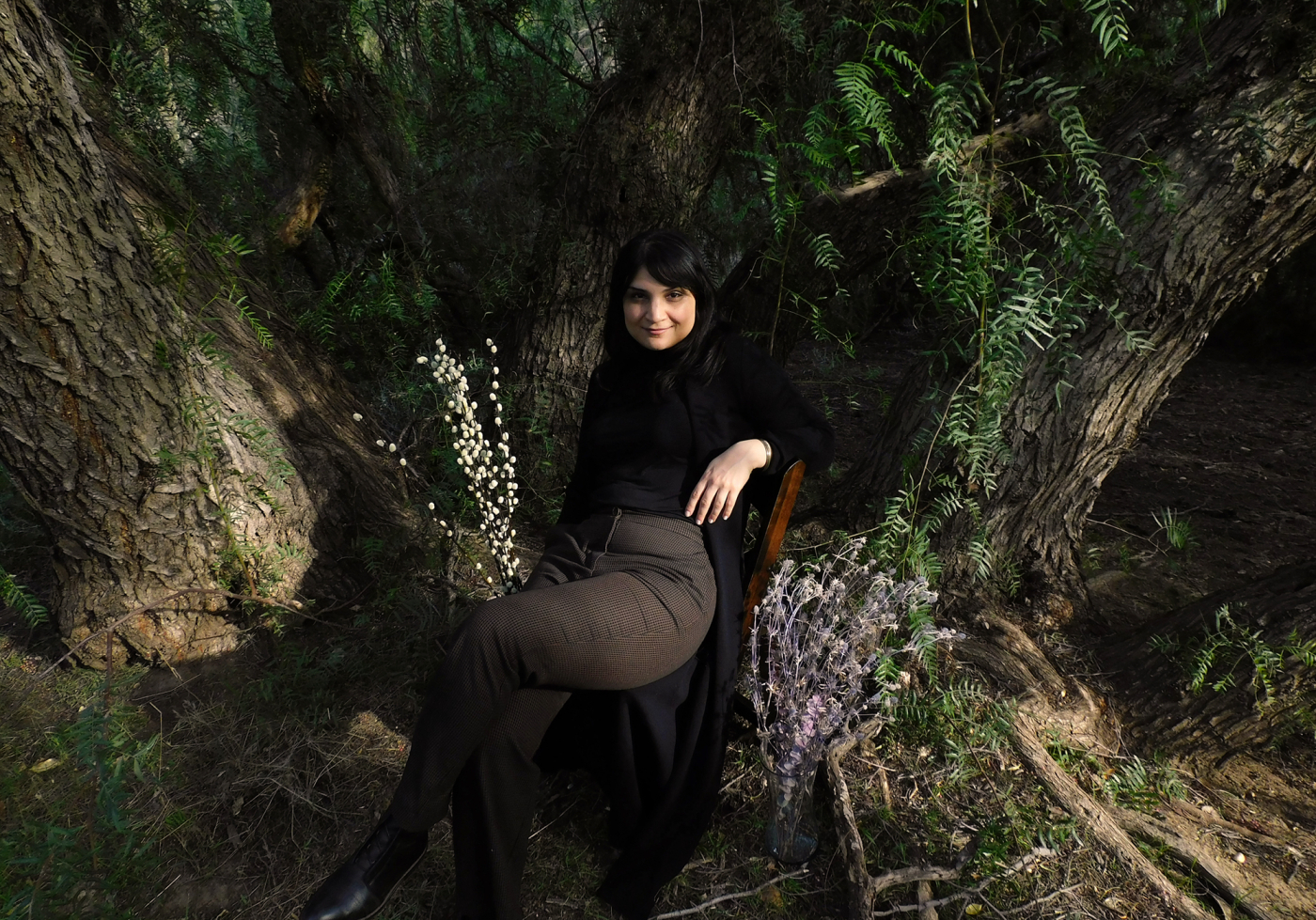
Listening to the music of acclaimed Canadian composer and performer Sarah Davachi live is an experience riven with contradictions. You enter an aural space which offers its own solution to the problem of dualism by being simultaneously utterly cerebral and intensely visceral, intimate yet transcendent. Her drone music is austere, glacial, yet there is a baroque ornamentation which emerges from microtonal frictions. To sit in a church pew, in the dark, overwhelmed by the rolling swells of the organ, is to know something that, while secular, evokes the sublimity that instrument and those spaces were originally designed to give rise to.
At 2 hours 20 minutes, her new album The Will of Tongues is a deliberately demanding experience, but one whose drones and uncanny textures create utterly absorbing psychoacoustic effects. There are elements of 1960s minimalism and early music, but the compositions are entirely their own thing. For me, something about this music evokes weird spaces. The listener feels as if they’ve been pulled through some membrane from this mundane world and into a strange place of wonder – echoing halls, menacing statuary, cobalt mires where weird seven-winged viridescent dragonflies flit, decaying industrial blocks, staircases that spiral up to nowhere, rooms full of tailor’s dummies that seem to shift in your peripheral vision – part the House from Piranesi or House of Leaves, part Stalker’s Zone, part Borges’s Library of Babel, part the labyrinthine places of Kafka’s novels.
Timothy J. Jarvis: Sarah, your compositions often get considered alongside contemporary ambient music, which Eno famously called “as ignorable as it is interesting”. Your work, by contrast, compels attention and demands effort of the listener. What’s it like to have resonated with a listenership that might not normally encounter music of the kind you compose, and how would you define yourself generically?
I just don’t consider my music ambient, because it’s meant to be listened to in a pretty direct way
Sarah Davachi: I’m glad that you asked that, because I hate being called ambient. Nothing against ambient music or the concept of it or whatever – I just don’t consider my music ambient, because it’s meant to be listened to in a pretty direct way. You have to actually listen to what’s going on. Although I definitely have an audience who understand that and who engage in that way, I do notice that sometimes it’s people just putting the music on. Then, of course, if they’re not able to listen in that way, they’re bored: “There’s nothing going on. This is just one note.” So, yes, it’s something I struggle with.
I feel more comfortable saying my music fits into the world of drone music, because the sustained durational element is important, but really I think of it as belonging to the minimalist tradition. I think everything that that music was trying to do, I’m also trying to do.
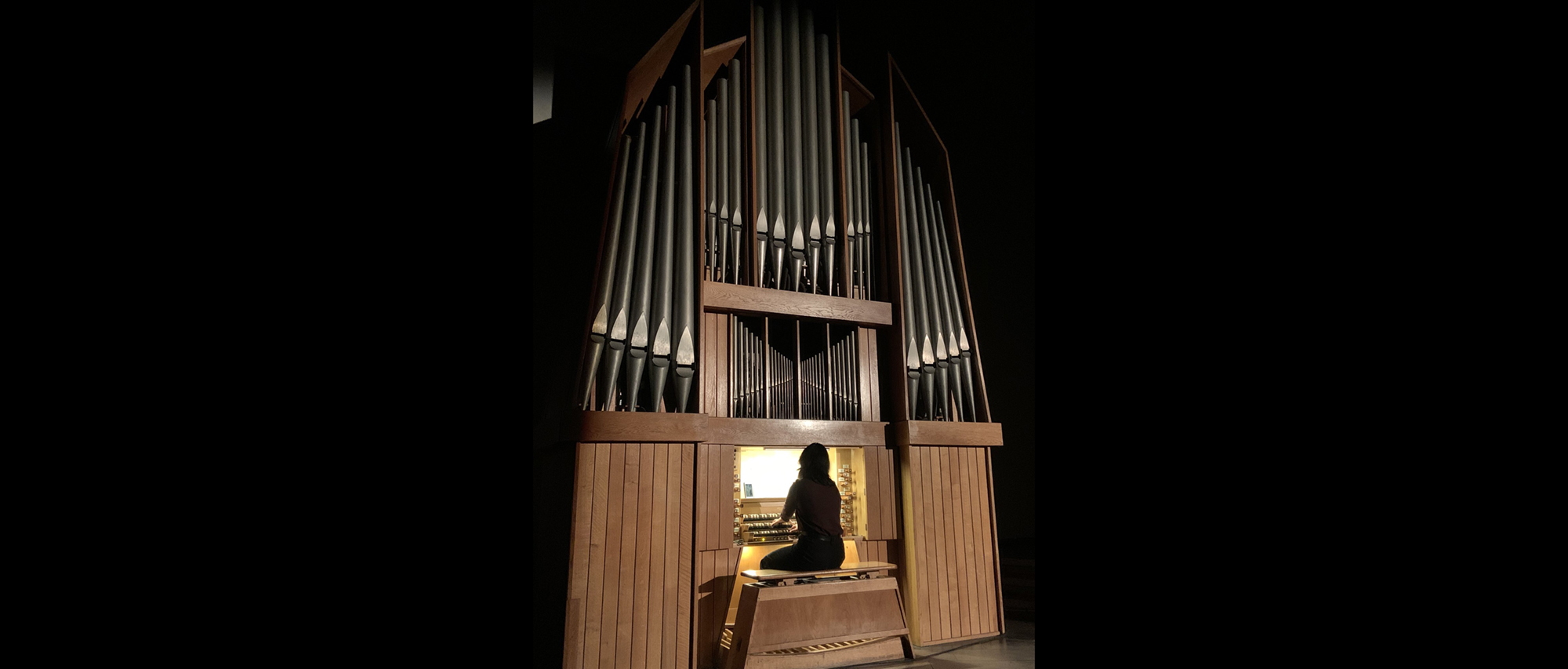
Sarah Davachi performing at Emmaus Church, Berlin, October 2017
TJ: We’ll come back to minimalism, but first I wanted to ask – there’s a spatial, quasi-architectural feel to your pieces. Given that, how would you describe your new record, The Will of Tongues? What sort of space or building is it?
SD: Wow, that’s a good question. There are definitely architectural spaces and materials which resonate with me and influence – indirectly, at least – how I think aesthetically or texturally about sound. I wonder if the whole album is a specific room, or if it’s more like a building where the different pieces are different rooms. Or maybe there’s a central room and then there are some rooms that are just kind of passages. I haven’t seen Backrooms yet, but when it came up recently, I was thinking about how I like that feeling of creating a room that feels like it’s empty in some way, or that has some kind of liminality to it. I like creating that feeling of something momentary happening, something not quite graspable. There are a set of pieces on this record that I titled “Interludes”, which I think of in that way: they’re little etudes that are meant to feel like connectors, a little bit ephemeral, kind of there and then not there. Those ones I guess I think of not quite as backrooms, but as hallways – not really a room you’re meant to spend time in, but that you still have to pass through to get somewhere else.
TJ: The corridor is a uniquely Gothic space – from secret passages in classic Gothic fiction to the corridors of the Overlook Hotel in Kubrick’s film of The Shining. Backrooms has a really compelling premise, though I felt it undercut itself with a coherent psychoanalytical explanation of what’s going on, which is a bit of a shame. It’s a good horror film, but it’s not as radical as, say, House of Leaves, which is similar but much more extreme.
SD: I don’t normally consider myself somebody who likes horror movies – I’m not into, like, serial killer stuff – but, actually, anything supernatural is super-interesting to me, and I always think the best genre of horror movie is the haunted house movie. You can do so much with the different rooms, the different spaces. I never really connected that to my interest in architecture and the way we inhabit space, but I’m going to think about that differently now.
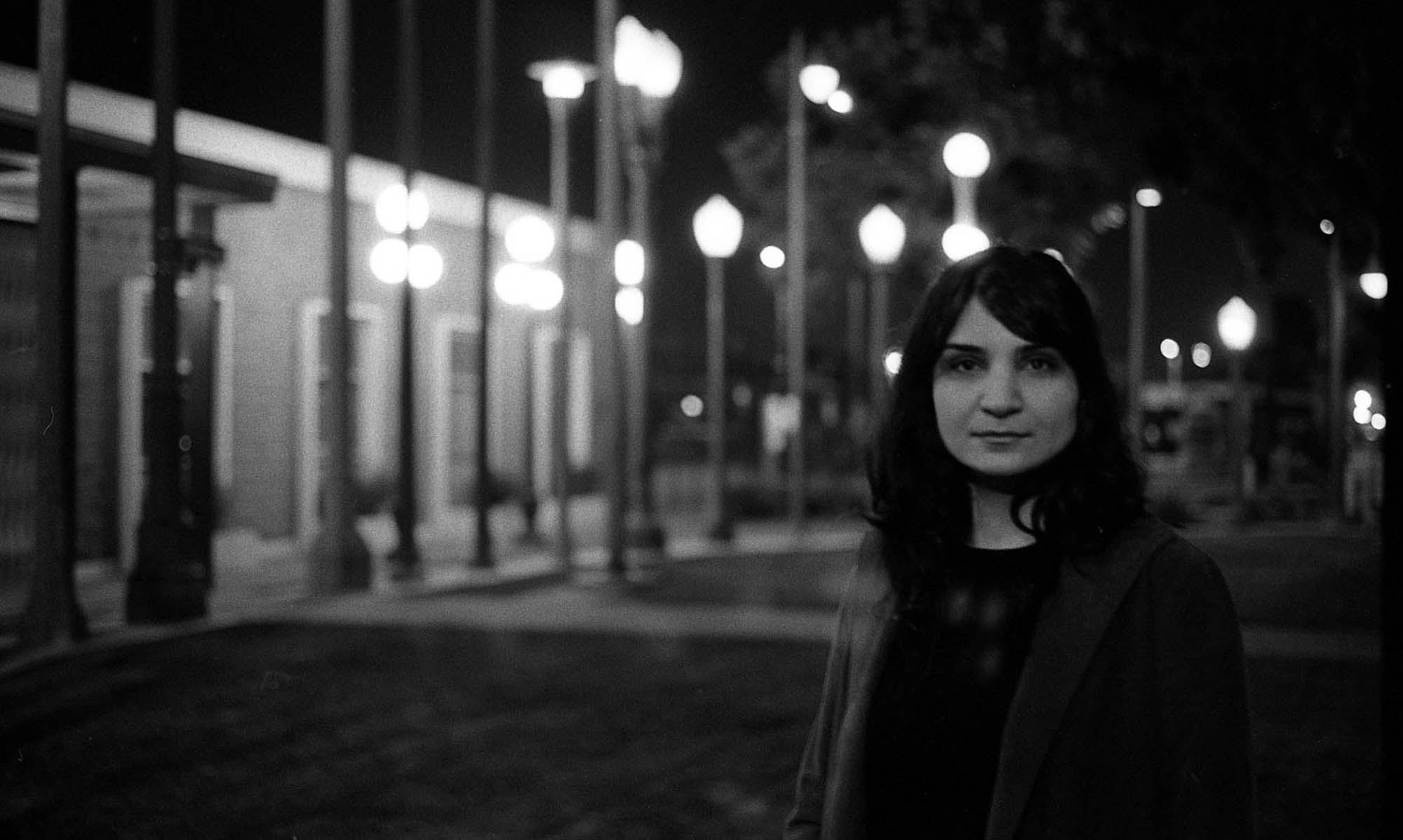
Sarah Davachi, December 2018
TJ: Do you see a resemblance between composition in sound and composition in space?
SD: Definitely. I’ve often thought that if I wasn’t a musician, I would be an architectural historian or restoration person or something like that. One of the first composers I got really into was Xenakis, who was also a trained architect who worked for Le Corbusier. He was doing this kind of installation work, building within other spaces and aiming to create this extra element of, I suppose, the dimensionality of sound. But for me architecture is interesting because it defines the spaces you live in. Everything that’s designed about a house impacts the way you live and the way you feel throughout your life, and for me, music acts in exactly the same way: as a composer and performer, I’m creating a space for somebody to go into and exist within for a period of time, and it’s going to make them feel a certain way during that time. I create all the conditions of that space – what it’s going to look like, how it’s going to feel, the things that are in it – and then the person comes in and creates their own meaning within that. Obviously, it’s a mental space rather than the physical space of architecture, and the spaces we live in we live in for more than the length of a piece of music, so they have different kinds of impact.
TJ: We touched on minimalism earlier, but I think there’s also a lot of early music, and of the sacred tradition of the Middle Ages, in what you’re doing.
Every time I play an organ, there’s a moment where I stop and I can’t believe I’m making this sound just by sitting and doing this
SD: Sometimes I will take a piece of early music or something and use parts of it as a variation within a certain piece, but I don’t think of that as quoting specific composers or kinds of music from that era. It’s more about drawing on the structure and the way that the music was meant to move, which was mostly through theme and variations. You’d have this notion of the music, but what each person would do with it and where they’d go with it was supposed to be different. That’s pretty much the opposite of the way that the classical era of music works, with its strict adherence to the score and to the way the composer wanted things to be. The essence or the ethos of early music was more about exploration and iteration, and iteration is a really important part of the way I think about my music in general – taking something and putting it in a different context and trying it in different ways to produce something that’s new but that gets closer to what you’re looking for in that idea. I also tap into a lot of structural things in the way that a lot of early music works, harmonically or stylistically, and in using historical tuning systems, for instance.
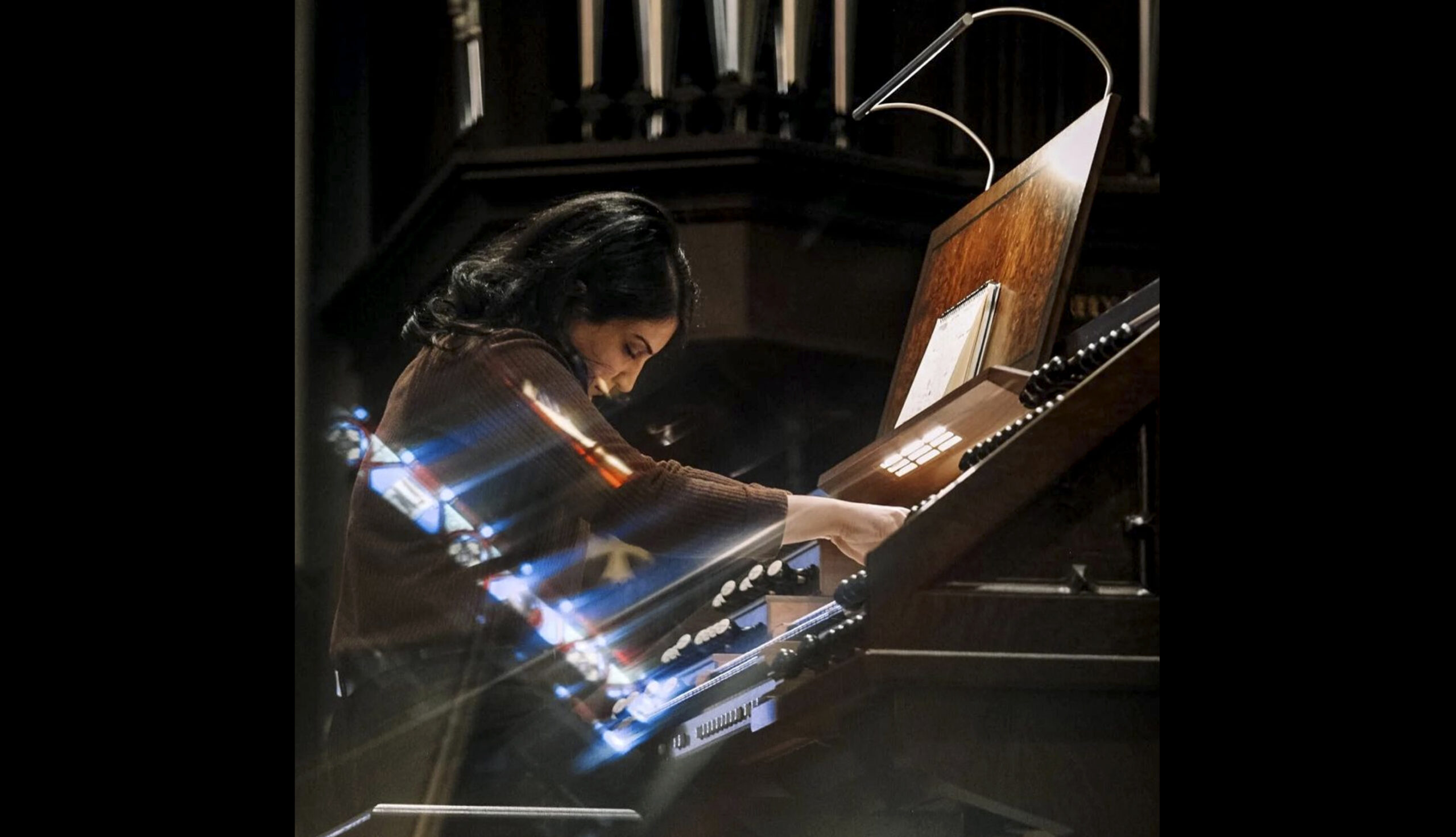
Sarah Davachi
TJ: The association with early music might also come from your slight move away from the synths and electronic instrumentation of your earlier compositions and towards the organ. What is the appeal of the organ as an instrument? When did you start to love the organ and why have you moved into that world?
SD: It’s funny, because I don’t think of the organ as connecting to early music necessarily – at least, no more than any other instrument I use. I didn’t grow up in a religious environment at all, so the organ has never had a church connotation for me, either. I grew up playing the piano, and I used to notice things like different harmonies and chords and things, but I couldn’t really listen to them because with the piano, a sound is there and then disappears and you can’t do anything about that. I first discovered the organ when I was working at a keyboard instrument museum in Canada, giving tours and demonstrations on the instruments. I remember sitting at this organ one time and having some intervals, chords, whatever, held down, and being able to listen to what was happening. So for me, initially, the organ was a practical solution for getting a sound I knew I wanted but hadn’t known how to get. It let me sustain the sound and actually hear those things I wanted to hear.
What I appreciate about organs now is how much difference there is in them. Each instrument is its own thing. You can play the same music, the same notes, and it’s going to be a completely different experience depending on the instrument.
TJ: I’d not considered that the tonal qualities of different organs could vary so much – that’s fascinating. Do you have a favourite organ you’ve played?
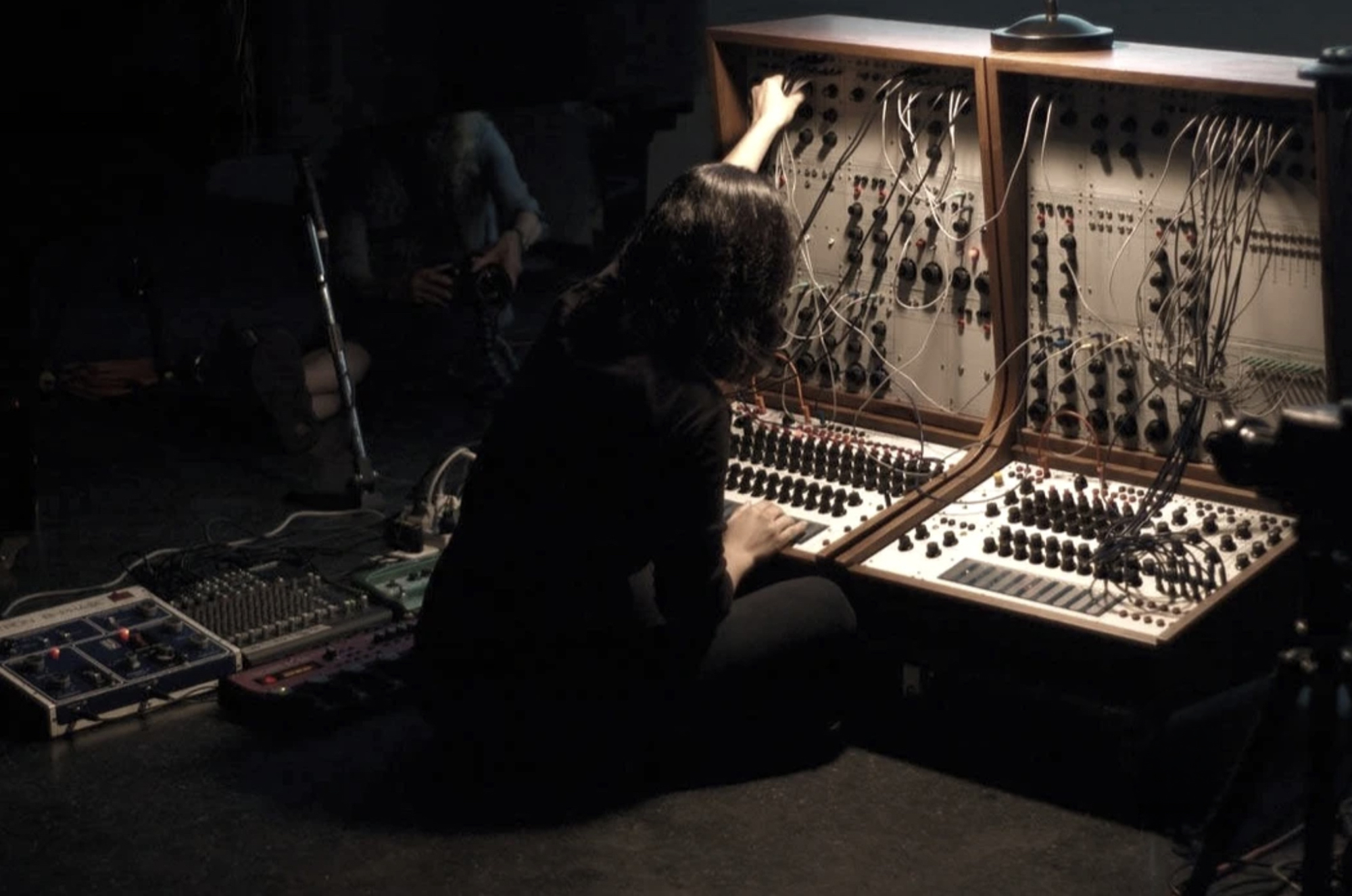
Sarah Davachi, New Forms Festival, Vancouver, September 2013
SD: There’s a converted church in Amsterdam that’s now a concert hall called the Orgelpark, which is exactly what it sounds like – an organ park, a big room with seven organs in it. One of them, the Van Straten organ, is a modern reconstruction of an instrument from the late 1400s, so it’s essentially a medieval organ, and you don’t see too many of those around. It’s actually a very simple organ compared to modern versions, but it’s such a physical instrument. In modern organs, there’s a lot more separation between what you can control yourself with your hands and the level of nuance you can have, but there’s a real directness when you’re playing the Van Straten. I’ve never come across another quite like it.
TJ: That physicality is interesting, because while there is a cerebral quality to what you’re doing, and a highly intellectual theory behind your compositional approach, the actual experience of listening to your records and especially to you performing live is really embodied, even psychedelic due to the intensity and the psychoacoustic quality. Does that have to do with the fact you’re having an embodied experience playing a particular organ?
SD: Yes, definitely. Not all organs have that level of control of nuance, that ability to control things directly, so most of the time when I’m playing the organ, it’s not that level of extreme physicality or embodiment, but it’s still there for me as the person playing the instrument. And I’m not at a distance from the organ – a lot of times, I’m sitting right in it, hearing it as a performer. Every time I play an organ, there’s a moment where I stop and I can’t believe I’m making this sound just by sitting and doing this – there’s nothing else going on. So, yes, there is still a pretty extreme feeling of embodiment with the organ.
You mentioned theory, and I think it’s really easy to get lost in the world of the music being about the theory. The way I compose, the theoretical stuff is just a tool I use, and I try really hard to find a balance between tapping into that and still making music that connects with me and other people in some way. Part of that, especially when I’m performing live, has to do with pacing, with when I’m doing things and changing things.
TJ: Does that mean there’s an improvisational aspect when you’re performing live?
SD: No, nothing is improvised. In fact, it’s almost the opposite: I come into performances with a basic score of the pieces I’m going to play, and I usually have three or four hours before the concert where I’m registering the instrument, figuring out exactly what’s going to do what, when. So everything’s actually very controlled in that way. What isn’t so controlled is the timing of things, when I go: “Okay, I did this, now I need to do this, now this is going to happen, now that is going to happen.” I make those pacing decisions in real time, responding to what I’m feeling and hearing. To me, that’s not improvisation, it’s simply listening in the moment.
Edited with Afterlight
TJ: A few years ago I saw you play live in St Giles Cripplegate, the church in the Barbican in London. It was very loud, very dark, and an incredibly intense experience, almost disorientating. It made me think about the sublime response that organs and churches were built to evoke in the congregation, which you seem to play on in a secular way. The Will of Tongues amplifies some of your tendencies towards difficult but immersive and transcendent listening experiences. I wondered if you could tell me a little bit about the compositional ideas and approaches that inform the new album, because I know it’s a slightly different direction for you, or at least an intensification of some of the things you’ve done in previous records.
SD: That’s a good way of putting it. I mean, it’s considerably longer than previous records, which in and of itself is a bit of a challenge. The bulk of the record came from three different ideas or pieces, three commissioned works. In 2025 I had a residency at EMPAC in upstate New York, where I was working through some different ideas. As I mentioned, iteration is kind of a big thing, and there were specific ideas I’d referenced or hinted at or kind of stumbled upon in other pieces that I wanted to give proper space to actually working through in their own compositions, so I started with conceptual ideas for the kinds of pieces I was working on there.
Around the same time, I was also doing a choral commission. Usually when I’m working on something, my brain is in the same place for that period of time, and anything I’m doing in one piece is hinted at or works its way into others. A lot of what I do has to do with harmony, and on this record in particular, the different ways I think about harmony came out in a lot of different pieces, in part the harmonies themselves and then also how they relate within the structure of a piece, over time.
The organ pieces were the last things I worked on, and for me they feel like the most coherent of any record I’ve done – they relate to one another and have the same conceit, a specific idea of intervals and harmony and how they change over time. They feel like a connected set of pieces, whereas maybe on previous records, it was more like those were the specific organ pieces I was working on at the time, but they weren’t necessarily connected in a direct way. Here, because I knew it would be easy to lose the listener with a really long album, I was more aware of the need for that cohesiveness.
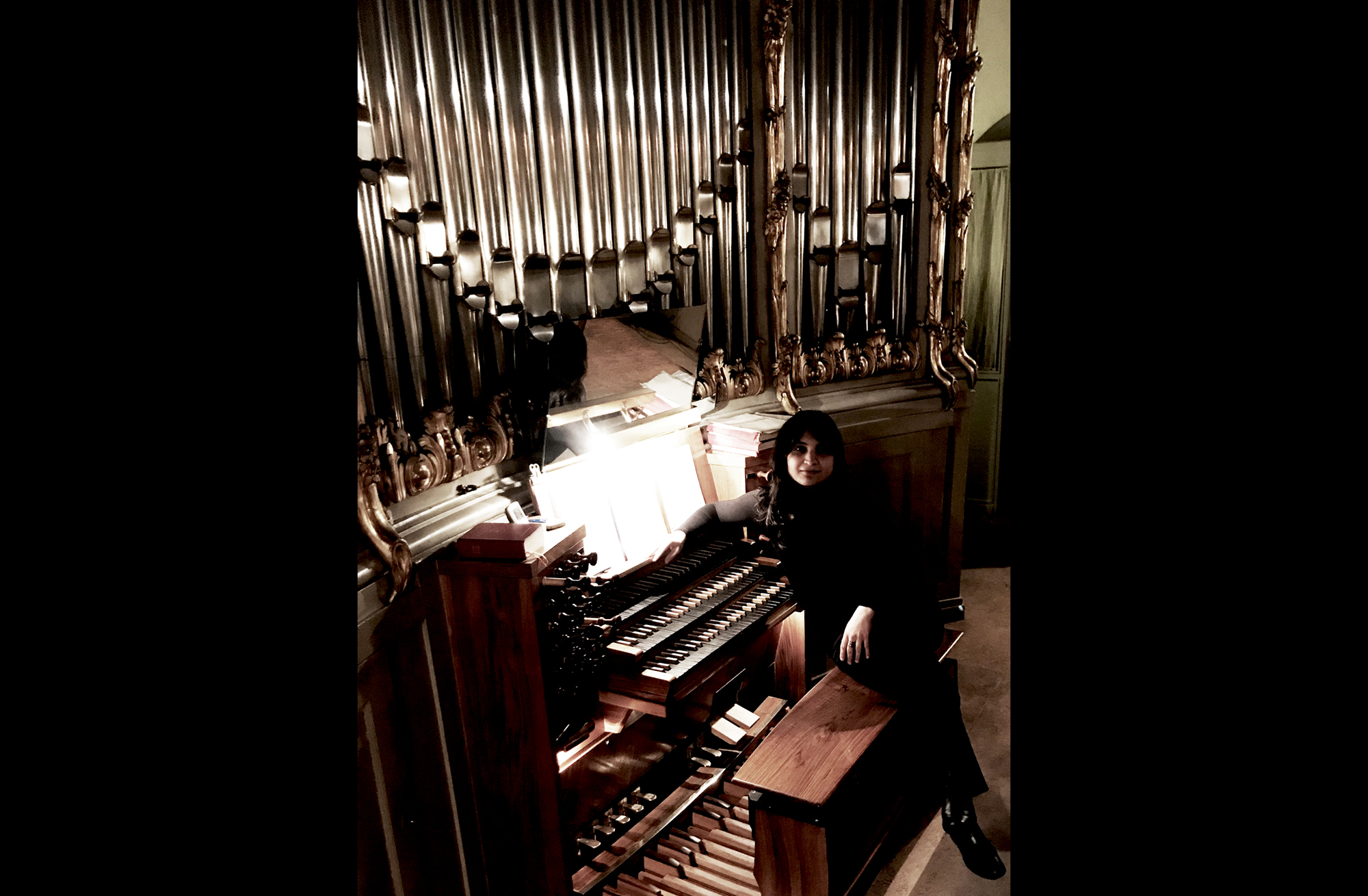
Sarah Davachi in Sweden
TJ: I was really interested that the notes accompanying The Will of Tongues mention the concept of listening as “a kind of imaginative negative space”. That made me think of the secular nature of how you approach what might be considered sacred kinds of tonalities, such as the via negativa, which is a medieval theological approach to understanding or moving towards God through negative pronouncements. The idea is that human language is too flawed to approach the mystery of the divine, so you don’t say anything positive about God, you say something negative. That’s something that writers of weird fiction, in particular, also do: the entity or the other thing is usually an absence, and the impact of the weirdness comes from that. There’s also a nice link because you’ve performed with Pierre-Yves Martel, whose brother J.F. Martel hosts the excellent Weird Studies podcast. Could you say a little more about what that “imaginative negative space” means to you?
SD: Everything I’ve written about music or the way I think about music always comes back to things that I picked up in texts I encountered in my studies, my bachelor’s degree in Philosophy, and then my PhD. One of the figures who was really impactful for my PhD was the French philosopher Paul Ricœur, whose idea of metaphor theory basically said that an aesthetic experience functions like a metaphor. With a metaphor, you deliberately combine two things that don’t really make sense together to create this negative space – this void of meaning – and Ricœur says that any time you have an aesthetic experience, it suspends reality in a similar way, creating a negative space for human imagination to step in and build something new. I find that a really interesting way of thinking about things, partly because I wrote my dissertation on musical instruments and timbre, which is typically bound to the idea of their literal sound – when you hear an instrument, you think of the instrument that you’re hearing, as opposed to something else that it can mean when you suspend that literal meaning.
People get stuck in thinking everything needs to be instantaneous and easy, but actually, difficulty is good. Put the time into something and you’ll get something out of it
TJ: One of the things Western philosophy has been wrestling with since Kant is the idea of only having access to our sensory experience and not to that noumenal experience of things in themselves. The sublime, for instance, is a category of experience that almost hints at what might lie beyond our phenomenological perception. Susan Sontag wrote in an essay about Bataille that we lack for high temperature visionary experiences in the modern world, and I think your music is pretty unique in offering an outlet for the kinds of experiences that people don’t find in much of the rest of culture, and in generating such genuinely transcendent experiences for an audience. What advice would you give somebody coming to The Will of Tongues – or your music generally – in terms of the attitude to adopt in order to get the most out of the listening experience?
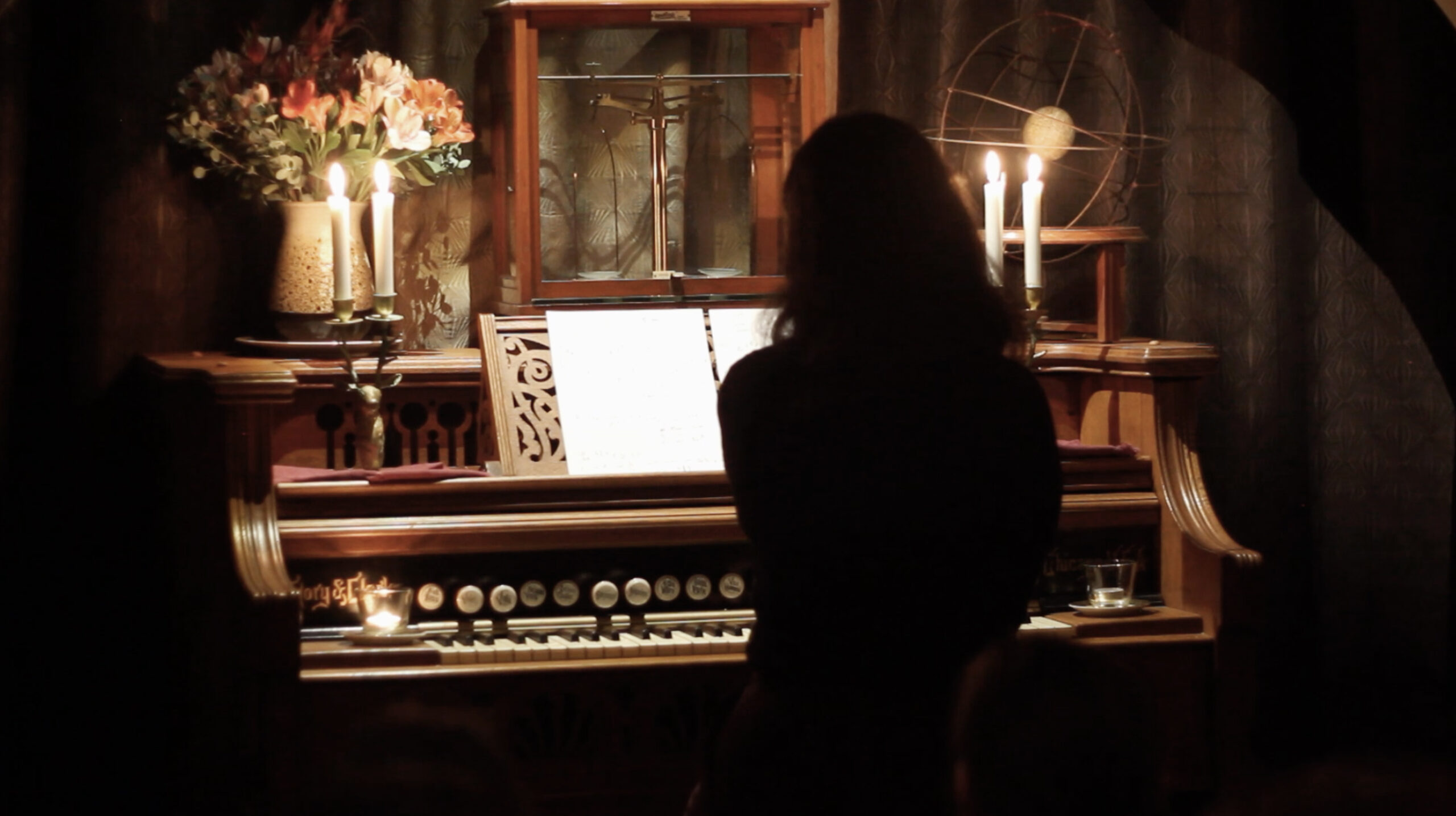
Sarah Davachi
SD: First of all I’d say you shouldn’t be put off by the length. Be patient, give it the time it needs. I mean, if you’re put off by the length, you’re probably not the right person to listen to it!
I often compare the way people engage with music now to the way they engage with movies or books. A movie is an hour and a half or even longer, and that’s a pretty big time commitment – most albums are much shorter than that, although this album happens to be longer – but I think most people understand that if you go into watching a movie thinking, “I don’t have time for this, I’m going to watch it double speed or fast forward through it”, you’re not actually watching the movie. Similarly, you can’t read a book by reading just a handful of pages or by flipping through it: you really have to sit and read the words and go page by page. But with music, for some reason, our patience level has atrophied. Especially with Spotify, people get stuck in thinking everything needs to be instantaneous and easy, to grab you right away, to be short and digestible, and then you move on. But actually, difficulty is good. Put the time into something and you’ll get something out of it, you’ll develop, you’ll gain what you put into it.
I pride myself on making albums: every album I’ve made is something I’ve thought about and striven to make a thing where I’ve put care into how it’s sequenced and balanced. So, I would ask people to respect that, and to see what happens if you try doing nothing else while you’re listening. I know it’s a big ask, in this day and age, to take two and half hours out of your day to just listen to something. I was always aware of that element when I was making my previous records, but I tried to ignore it and do what I thought was important. The slight difference this time is that I really wanted to make an album that would not be an easy, digestible, “Put it into ChatGPT and summarise it for me” kind of thing. You actually have to work for this one. C
Sarah Davachi’s new album The Will of Tongues is available for preorder now and is released 28 August (Late Music). Timothy J. Jarvis’s latest book is Treatises on Dust (Swan River Press)