


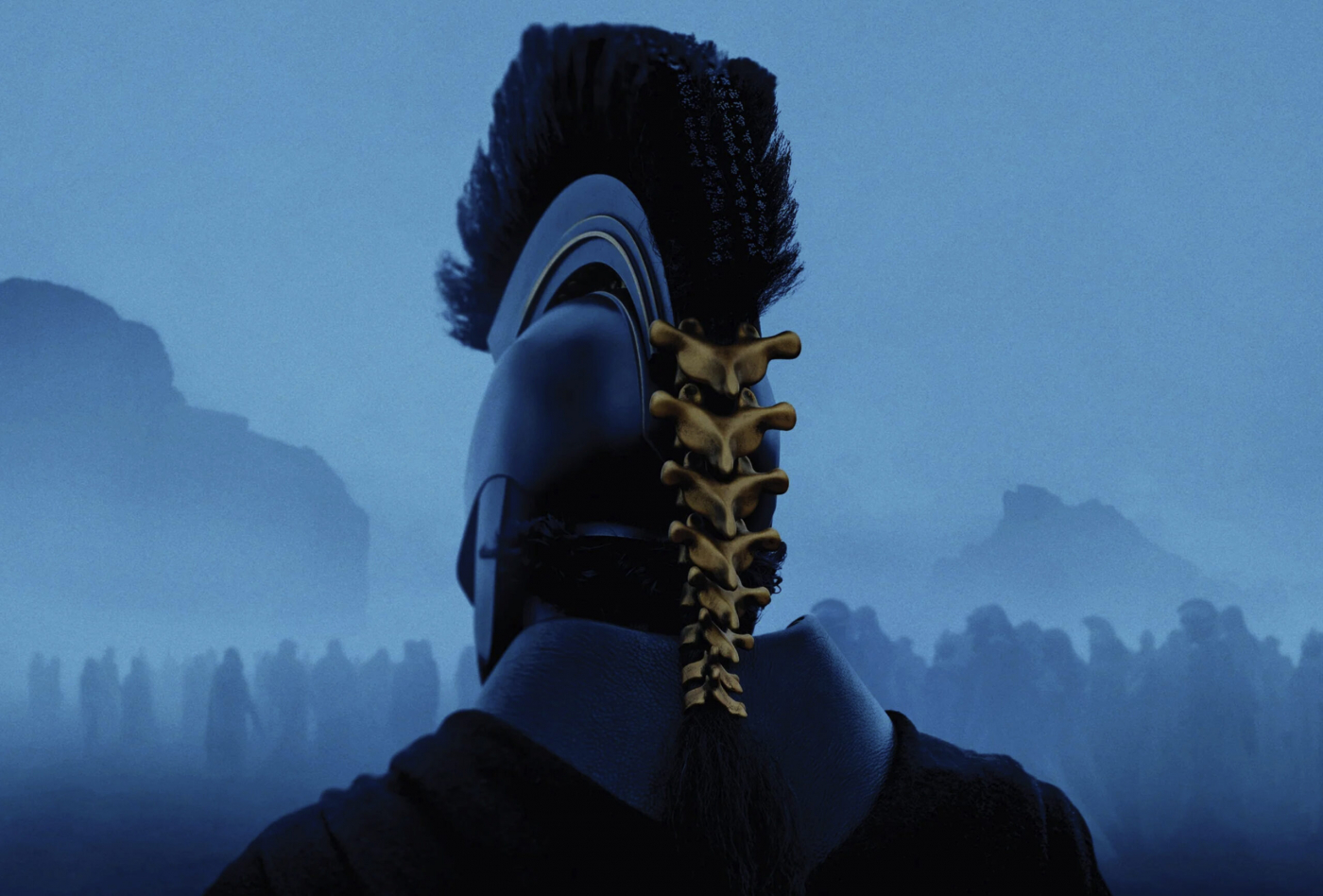
Many cities of men – Karen Krizanovich takes The Odyssey personally
Christopher Nolan’s inventive American English dialogue and the big wow of 70mm tech put a new spin on the Homer epic. Karen Krizanovich has notes
Christopher Nolan’s inventive American English dialogue and the big wow of 70mm tech put a new spin on the Homer epic. Karen Krizanovich has notes
On my first trip to Greece, The Temple of Poseidon at Sounion was the most breathtaking. Perfect in its setting on a levelled summit on Cape Souion, clearly visible to those at sea, even as ruins it suggested ancient power and mystery. It was only later that I noticed the name “BYRON” carved in huge hard-to-miss cursive letters into the stone. Lord Byron had graffitied this ancient spot in 1810. (So much worse than the time I took my most pious friend to see the Pompeii exhibit only to watch her put her hands on absolutely everything bearing a “do not touch” sign.) Byron vandalising this temple was both bad (he’s famous) and worse (what an ego) than any other defacing graffiti, but it is a compelling example of the lure of ancient Greek culture. It was relevant and it still is. The enthusiasm for it is not new.
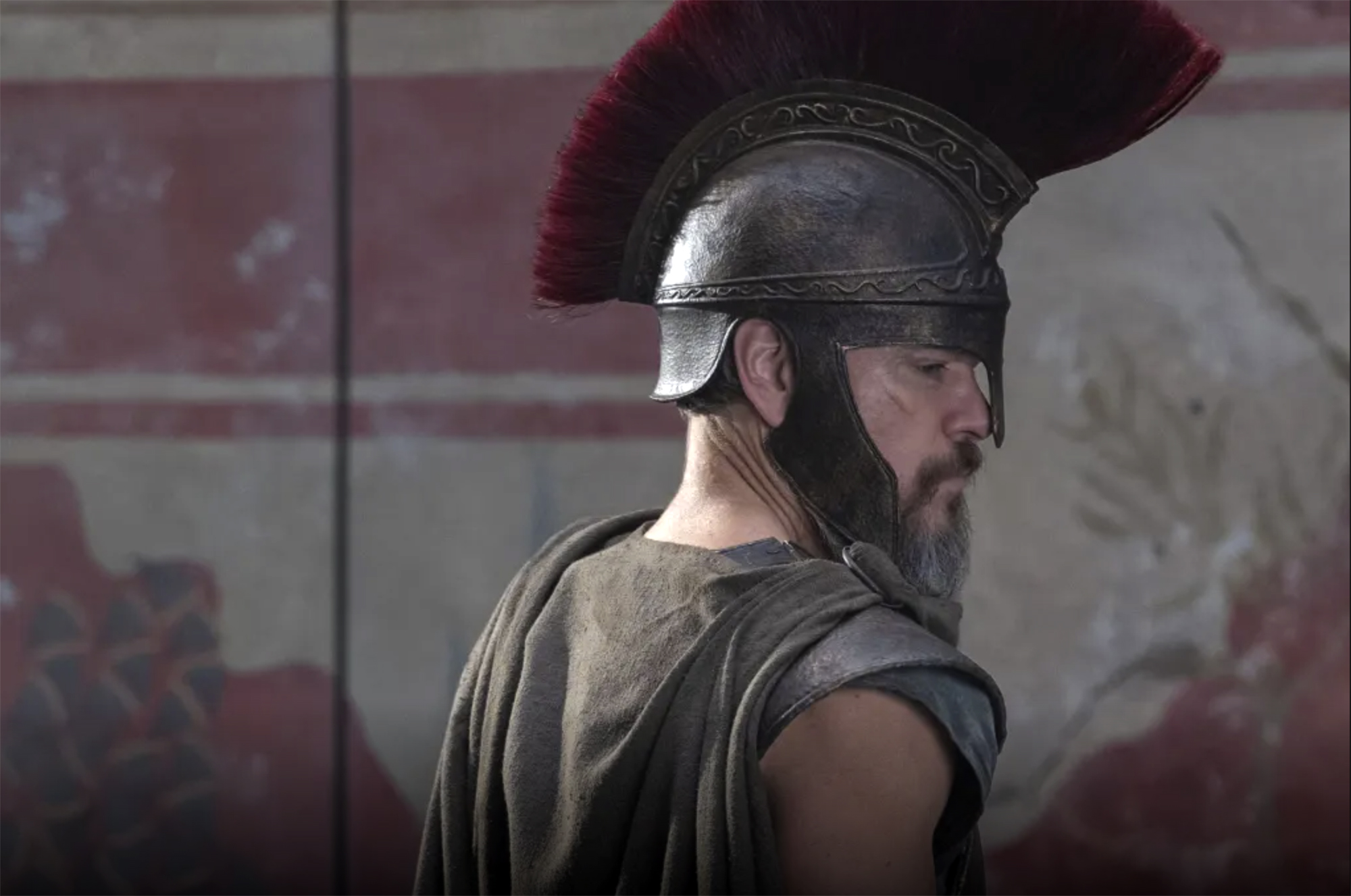
Matt Damon in The Odyssey
Ancient Greek culture calls its own race, carries its own baggage and makes its own souvlaki. Nobody tells that culture what to do. Part of that power comes from The Odyssey. As one of the oldest surviving pieces of literature, almost 3 thousand years on, the 24 books of The Odyssey have stood as a template of exciting, unstoppable storytelling. Translated into more than 100 languages and almost 40 film iterations, The Odyssey has influenced dance, art and song. Perhaps sometime in the future or even now, The Odyssey will be told in emoji, shapes, or smells. I am fairly sure there have been already a few Odysseys in interpretive dance and cake-baking. It has impacted how we think in ways we can no longer recognise.
It’s like the shock of picking up a New International Version Bible when you have only ever read the King James one
Not to deny the value of other ancient works such as the Epic of Gilgamesh, Beowulf, the Bhagavad Gita and others, The Odyssey excites the mind in a way few others have. Traditionally part of an oral tradition, The Odyssey can be dismantled. You can leave bits out and even skirt around the edges. While that will not tell the harrowing and unpredictable journey of Odysseus, it will still be a breathtaking story. In a kind of reverse snobbery, some may say that they haven’t read it, and they don’t know anyone who has. But it is the bedrock for many of our plot ideas, character arcs, and phrases still used such as “between Scylla and Charybdis”. At the very least people will know what a Siren is and what a Cyclops is. In short, what makes The Odyssey so compelling is that it is the archetypal hero’s journey that shows without a doubt that the greatest hero is also imperfect, a liar, a survivor, a show-off. Not in the Nolan film but in the text, Athene makes Odysseus (and sometimes his men) taller, smarter, stronger and younger to impress the people he encounters. Again and again, we identify with him. This is, amongst all the wonders of that ancient world, how The Odyssey has remained startlingly new, entertaining and moreish. We are him. He is us.
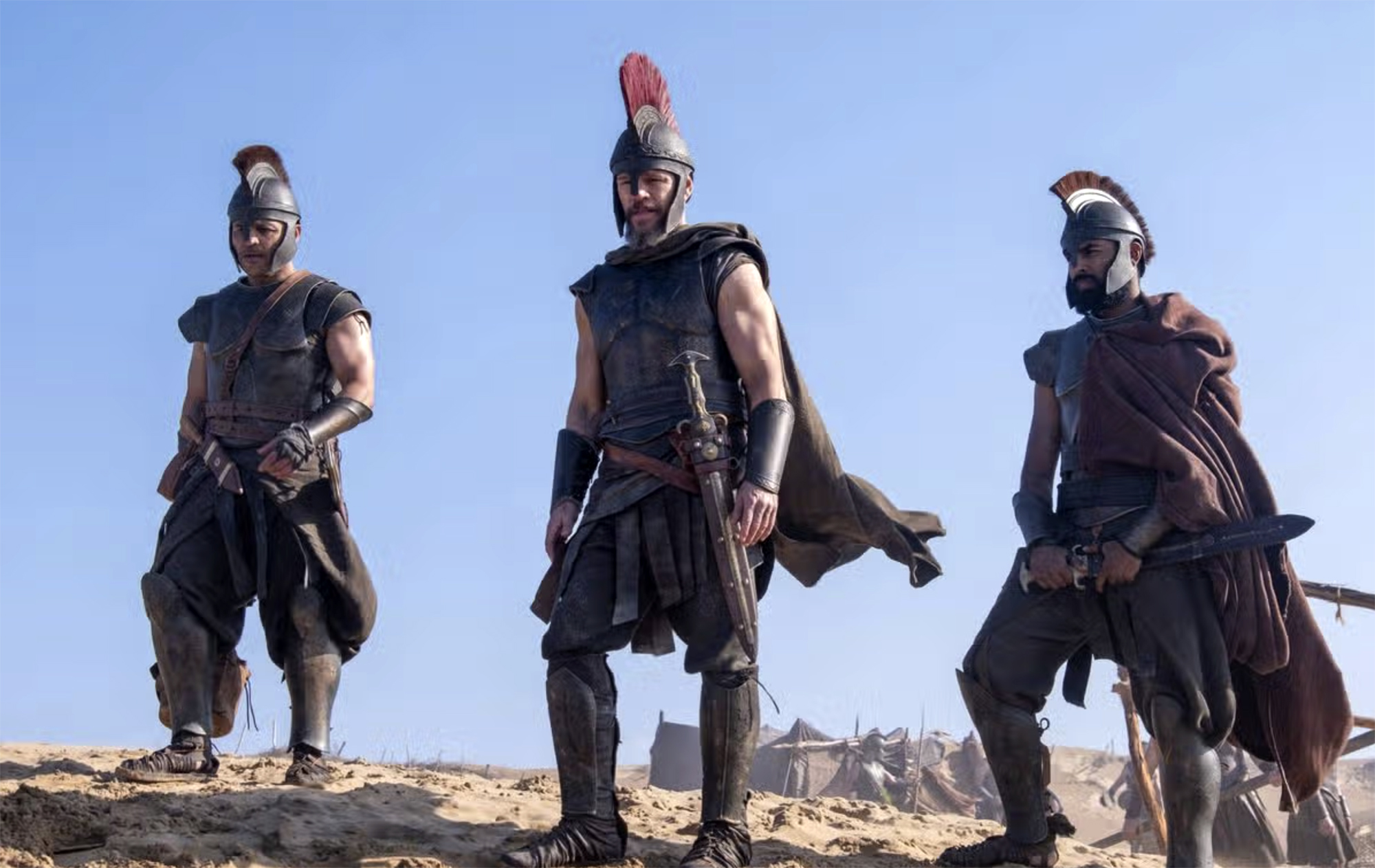
The Odyssey
Given his previous form, director Christopher Nolan’s 173-minute take on Odysseus had to be monumental. It is made using the ne plus ultra of filmmaking’s current capabilities. The only feature film to be create entirely on the notoriously loud IMAX 1570 70mm cameras, it carries a cast of headliners who have opened films on their names alone: Matt Damon, Ann Hathaway, Tom Holland, Robert Pattinson and others. However skilled Nolan might be, and whatever idea of his work you hold, the expectations of what this film can deliver run as high as the fears of how it might disappoint.
First off, the dialogue is unexpected. Told using relaxed American English rather than Shakespearian formality, the audience will at first feel the jarring of the familiar words — particularly if they have recently finished reading the text in one of its over 60 English translations. (I opted for Richmond Lattimore’s 1965 translation favoured by classics majors and those in the ivory towers — and apparently the most similar to the original text’s form. Most people are enjoying Emily Wilson’s 2017 translation.) When Tom Holland as Telemachus refers to Odysseus (Damon) as, “dad”, this casualness smacks of stooping to conquer. It’s like the shock of picking up a New International Version Bible when you have only ever read the King James one.
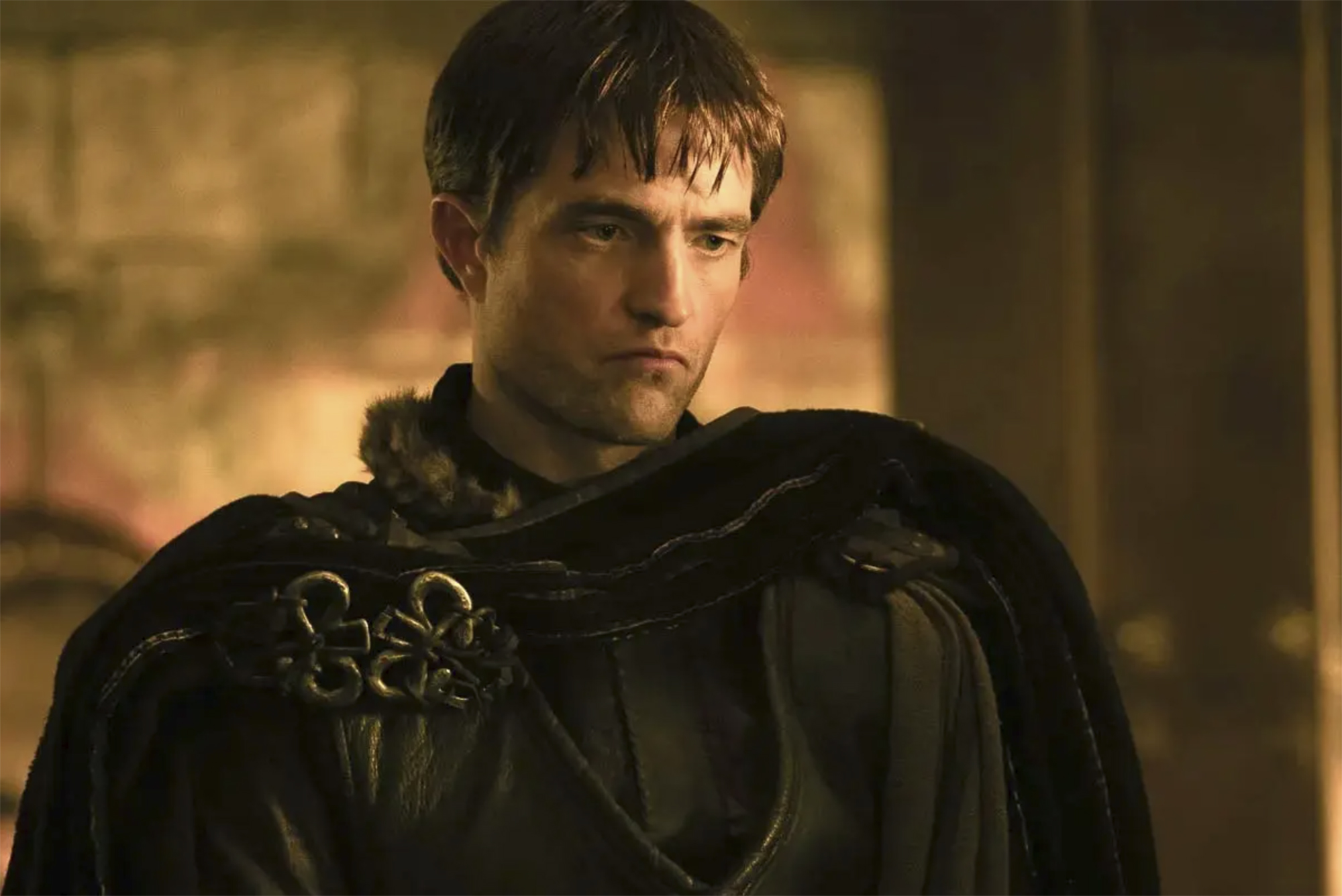
Robert Pattinson in The Odyssey
My fear of The Odyssey being told in a leisurewear of words soon faded and Nolan, master scriptwriter that he is, steps in. Omitting the wonderful pun of “No One” in the Cyclops’ cave, Nolan’s Odyssey is recognisable as The Odyssey, that book you read for educational purposes. You’ll remember the goddess Circe and Calypso from the notes you read to pass an exam.
Some things are brought into sharp focus. For example, all the force and heartbreak of what the sirens sing to Odysseus — what he actually hears (and in the film one other sailor hears) — is clearly stated. An exhausted Odysseus — Damon at his most anguished — says the siren song is everything you ever desired and everything you ever lost, the single thread that runs through most if not all of Nolan’s films. Elliot Page as Sinon is fragile, vulnerable and honest. Lupito Nyong’o luminous, smart and rare. And for those of us who are dreading the scene of the hunting dog Argos, look out for a stellar performance by John Leguizamo. Noted for stealing scenes in previous films, in The Odyssey he is the beating heart of everything the sirens sang to Odysseus. He is human pain incarnate awaiting the return of his master – and two hours in, his response at the return of Odysseus had one hard-hearted critic in tears. Me. C