


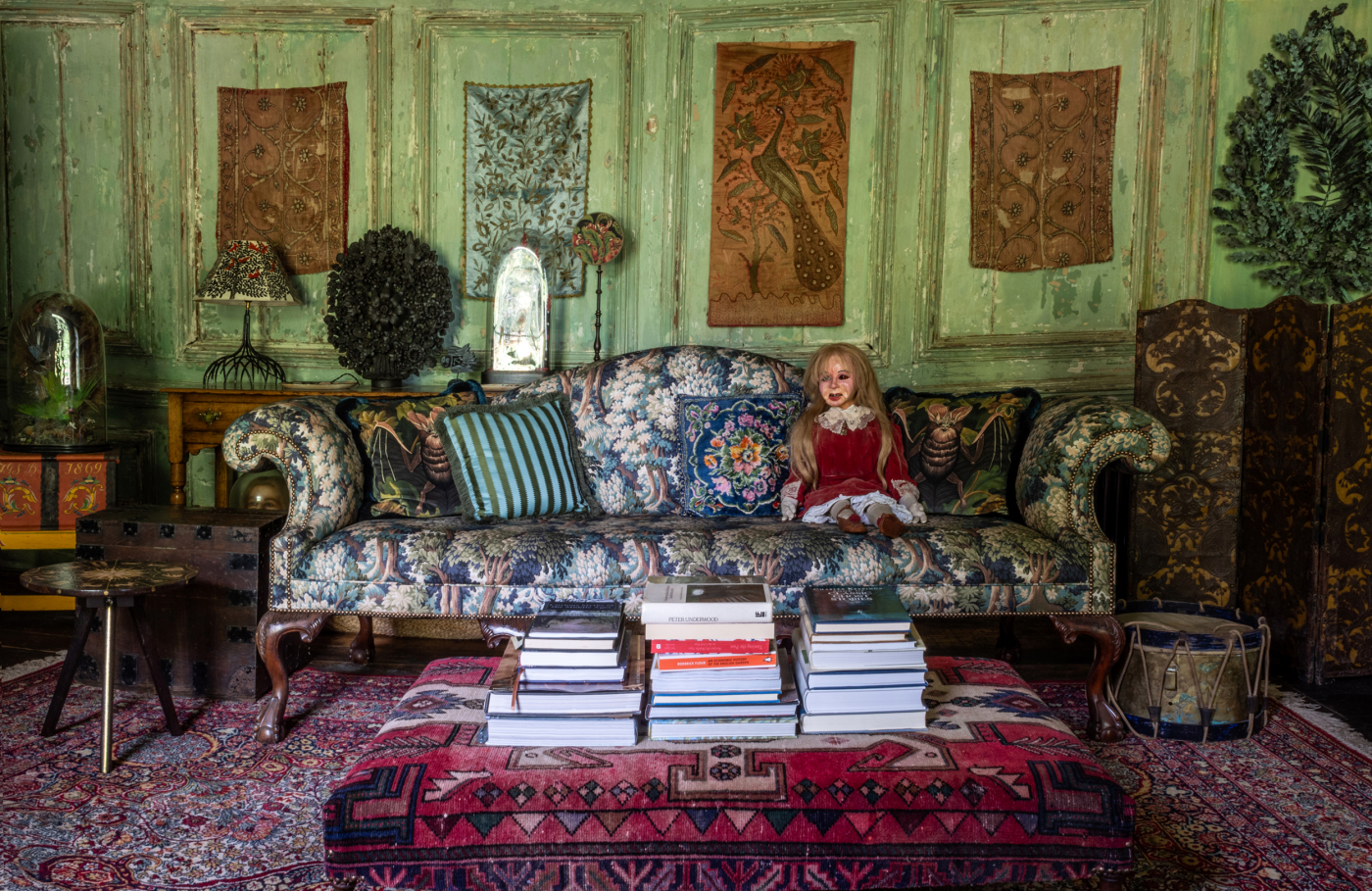
Good bones
Mark C. O’Flaherty introduces his new book, Sanctum: At Home with the Uncanny, looking at homes that contain intriguing textures and a past life, transformed and reinterpreted by the people who live with them now
Mark C. O’Flaherty introduces his new book, Sanctum: At Home with the Uncanny, looking at homes that contain intriguing textures and a past life, transformed and reinterpreted by the people who live with them now
When the lights go down in a theatre, it’s a sign that the show is about to begin, usually in a blaze of brightness, colour and contrast. Anything could be about to happen. When we are children, we close our eyes to make ourselves invisible. As adults, we do the same to meditate. One of the loveliest phrases you can hear is ‘Let your eyes adjust’. What you can’t see helps your mind work in ways we don’t fully understand. When the lens of your eye refocuses on an art installation or during a show, there’s a brief moment of tension followed immediately by excitement. What is in the shadows? Are we even present, or just imagining all this? There are infinite possibilities.
It is dust, mystery and darkness. It is the potential of the unseen
Sanctum is about those possibilities. It’s a book shaped from a collection of more than thirty stories shot and written over the last fifteen years, although most are fairly recent, reflecting my growing obsession with a certain style of interior. Ever since I started posting images of my previously published work on social media, I’ve noticed that the photographs that attract most attention are of houses that incorporate what you might call the uncanny. While many people appreciate the graphic beauty of a Charlotte Perriand wall lamp or a chair from Chandigarh, those objects are signifiers of taste and design history rather than personality. They are purchases. There’s nothing about their form that I’d define as uncanny.
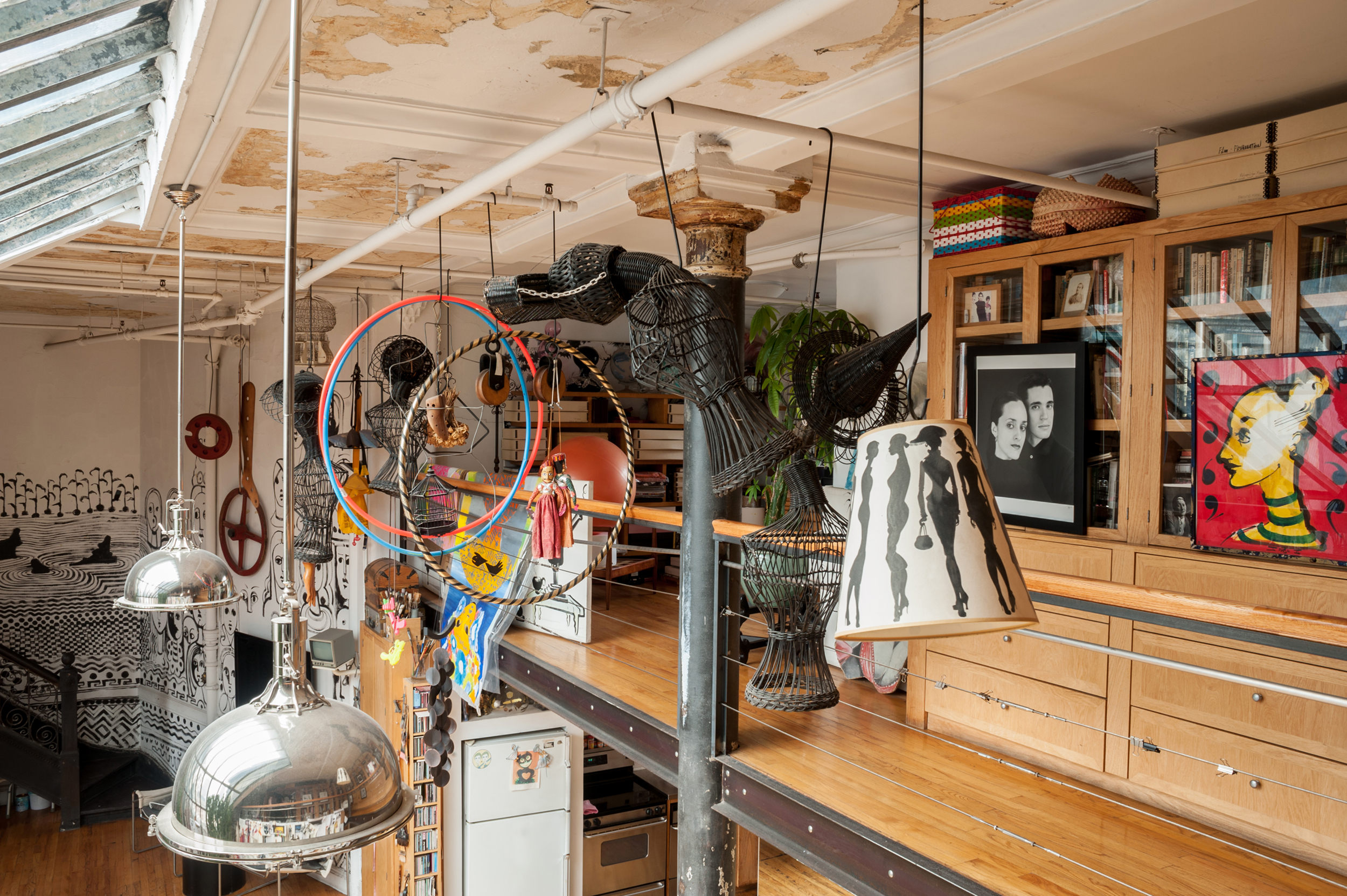
Ruben and Isabel Toledo’s Penthouse on Broadway, NYC
To me, the uncanny isn’t defined by fear. It’s about objects with shadow, undocumented history, the past and other lives. It is dust, mystery and darkness. It is the potential of the unseen. The possibilities. It is about spaces and things that are haunting, possibly even haunted. The uncanny elevates and enriches your life – but it cannot simply be bought. The uncanny is not a commodity. It must be fostered. My fascination with it may come from growing up Irish Catholic, surrounded by objects at home that took a long time to comprehend. I knew what a fireplace did, and a light switch, but what about a statue of the Blessed Virgin? Bring in the concept of transubstantiation and my family home in South London begins to look as uncanny as anything in these pages.
Some of the homes in Sanctum have crooked angles and faultlines running through the walls like the veins of a waxwork in a chamber of horrors. But they are buildings with good bones: many have been standing for centuries and will absolutely outlive their current custodians, as well as several generations to come. They all share a sense of what I consider the uncanny that lends them a unique beauty.
Pure fantasy, but no less fascinating to me, is Mickey Rourke’s loft in Adrian Lyne’s 9½ Weeks
My fascination with these houses is at odds with my reality. I was the first person to live in my Piers Gough-designed new-build apartment in London, and I have a phobia about living anywhere with ground floor access. I was once convinced that a rented flat I was living in was haunted: I recently found old diaries that recalled just how much of a rabbit hole I fell down, seeking to calm whatever presence I imagined was sharing the space. This explains why I have always been drawn to severe, clinical white homes – places where the arrangement of art and books, the furniture for sleeping and the preparation of food are as regimented as if part of a set of ascetic rituals. Some of the places that come to mind instantly are real, others fictional. Donald Judd’s homes in Marfa, Texas, and at 101 Spring Street, New York, are uncompromising minimalist white spaces with surprising flourishes of African ceremonial masks in the stairways. Both were used as family residences. Pure fantasy, but no less fascinating to me, is Mickey Rourke’s loft in Adrian Lyne’s 9½ Weeks, where his character drinks wine at a Richard Meier dining table from the minimalist architect’s 1982 collection for Knoll and plays Brian Eno’s Ambient 1: Music for Airports on a Nakamichi RX-505 tape deck.
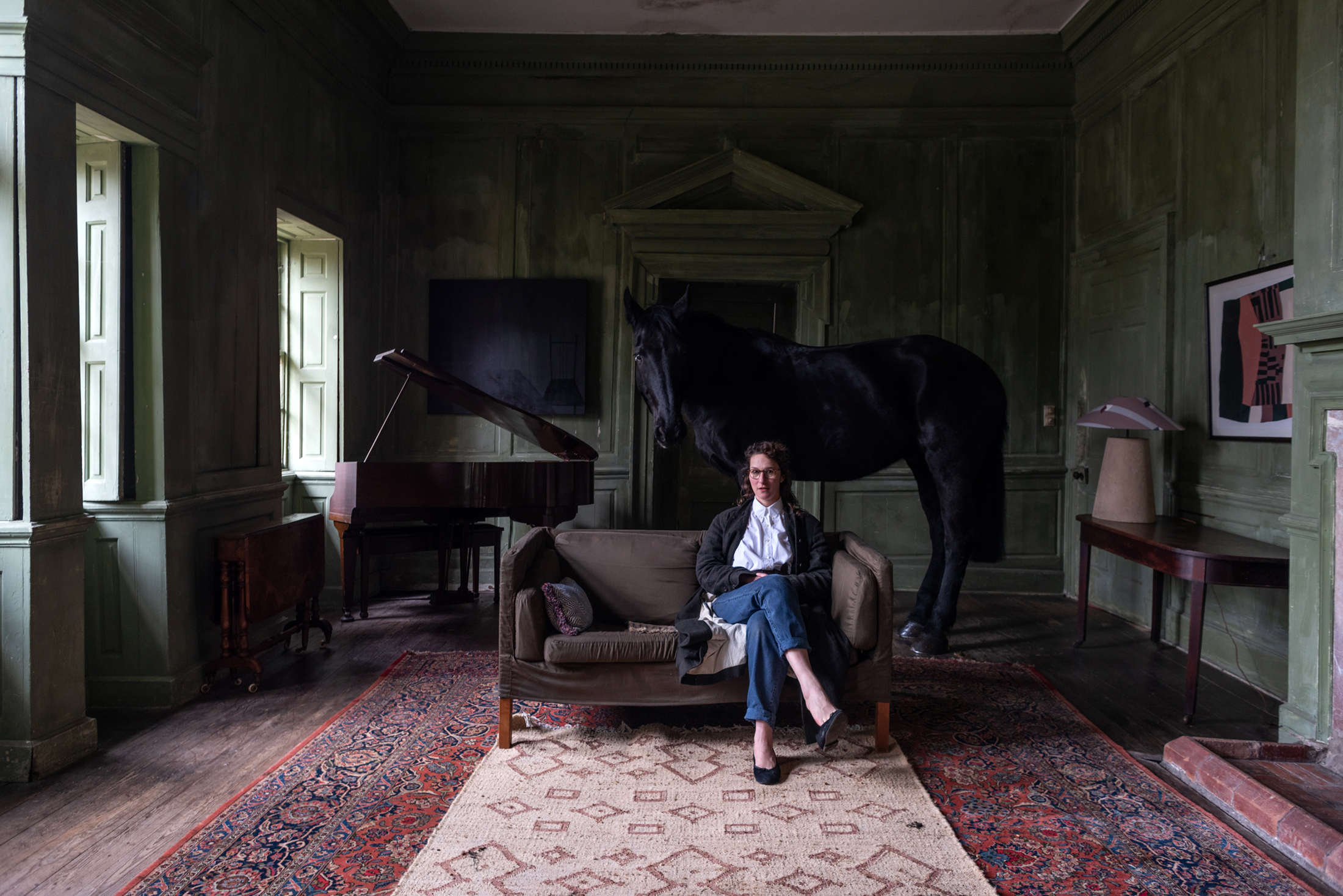
Sophie Wilson at her 1690 house in Crowland
Yet while I am often lost in a John Pawson daydream, I know I could never live like this. I lack the discipline. As much I am fascinated by all of that methodology and rigour, I am also obsessed with the opposite: places that have decayed to a point where just a few shreds of evidence suggest they were once occupied – ruined upholstery, yellowed paperbacks, a palimpsest of wallpapers and layers upon layers of paint. An abandoned space can be more romantic than sinister. I have put myself through peril, and my foot through tatami mats and floors, in the long-abandoned apartments of the old mining town on Hashima Island off the coast of Nagasaki, desperate to connect with the possibilities of the place. I have explored the derelict retro-futurist fibreglass Matti Suuronen-designed Futuro pods in Wanli, on the outskirts of Taipei in Taiwan, and once spent a frustrating hour trying to clamber into the Abbey of Thelema, Aleister Crowley’s notorious and short lived ‘anti-monastery’ commune in Sicily, where he practised his cult of ‘sex magick’ in the early 1920s. I love ghost signs, faded murals and the macabre. Somewhere in the intersection of all of those places – from Judd to Crowley – is the reason this book exists.
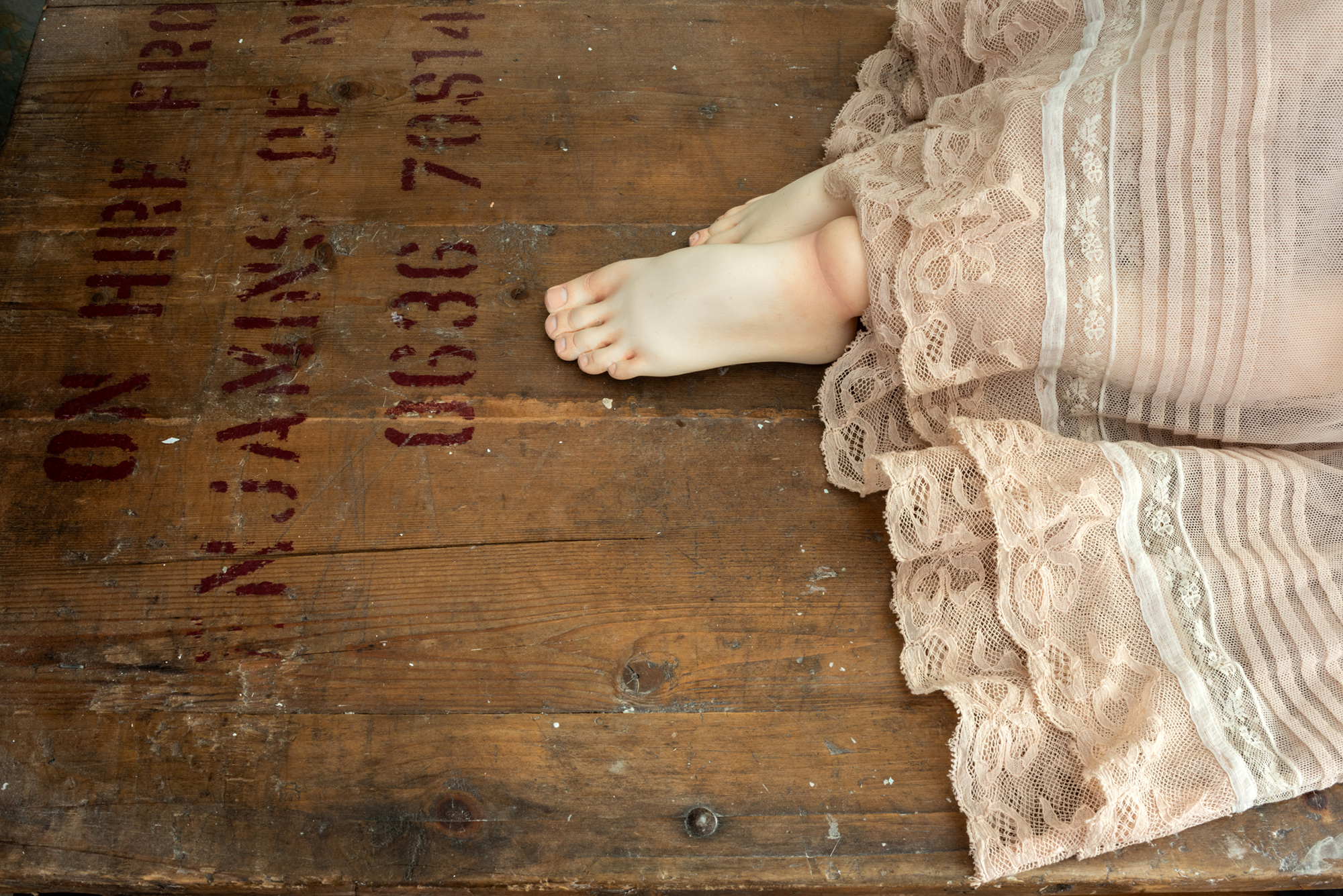
Dollmaker Leonidas’ 1930s Athens apartment
A key reference point for Sanctum is Jun’ichirō Tanizaki’s In Praise of Shadows (1933), a book referenced constantly by designers and architects. Tanizaki asserts that true beauty comes from flaws and ageing. Where there might be stark modernity evident in some of the interiors in this book, it’s tethered and twisted by wonky objects, from memento mori to esoteric architectural salvage. These homes are full of objects whose patina and provenance bring them into dialogue with other objects. They build an impression of purposeful imperfection.
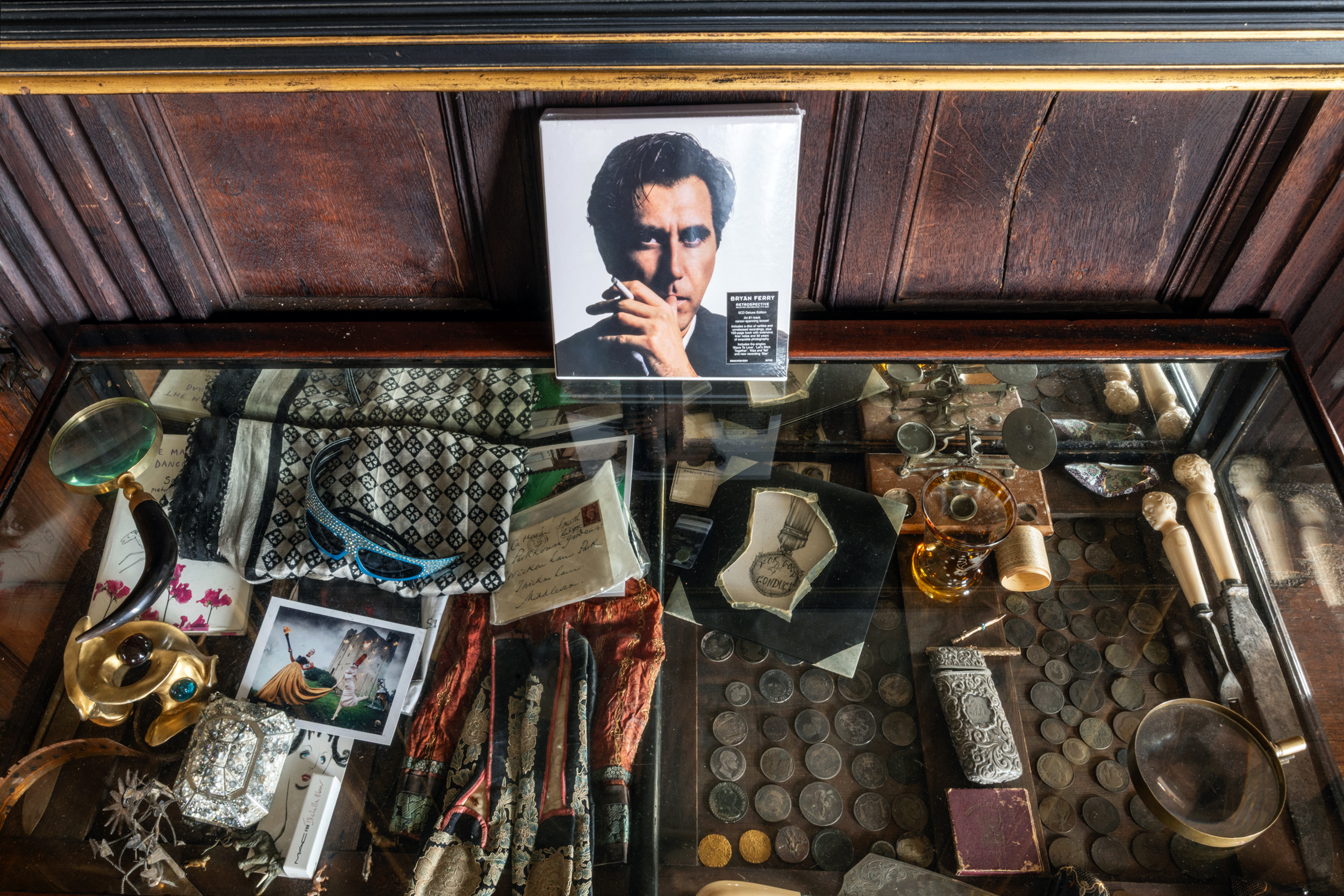
The cabinet devoted to Isabella Blow at Hilles House
Likewise, the people and places in these pages eschew anything that resembles a trend. Imperfection, for these individuals, is a real luxury – not the gold veins of kintsugi-repaired Japanese porcelain, but the barely perceptible difference between handmade and machine-made. You can spend fortunes on something that looks sleek from a distance, but up close is obviously designed by AI and 3D-printed. You can also buy something new from IKEA that offers function and good taste at a bargain price, but which has inbuilt obsolescence. . Better to purchase a chair from a century ago than most new products, shows the hand of its maker in its construction, and will outlast you. It offers not just longevity but a story – and you will become part of that story.
Some of the homes in this book are, essentially, living museums, not dissimilar to the much-loved institutions kept open today in London in the names of Sir John Soane and Dennis Severs. There are talismans, sigils and skulls, as well as rare artworks that would generate considerable heat at auction. There are antique children’s toys that once belonged to a young imagination, now matured, and objects from theatre and fashion shows that have become a part of the collective cultural imagination. Some of the people in these homes are makers themselves: ceramicist Marie Daâge lives in a 17th-century chateau in the Loire Valley, in which almost everything is an antique, apart from the tableware that she makes herself, all of it painted by hand; if you study it closely, you can see the coloured strokes made by customized brushes wielded by artisans in her atelier in Vendôme.
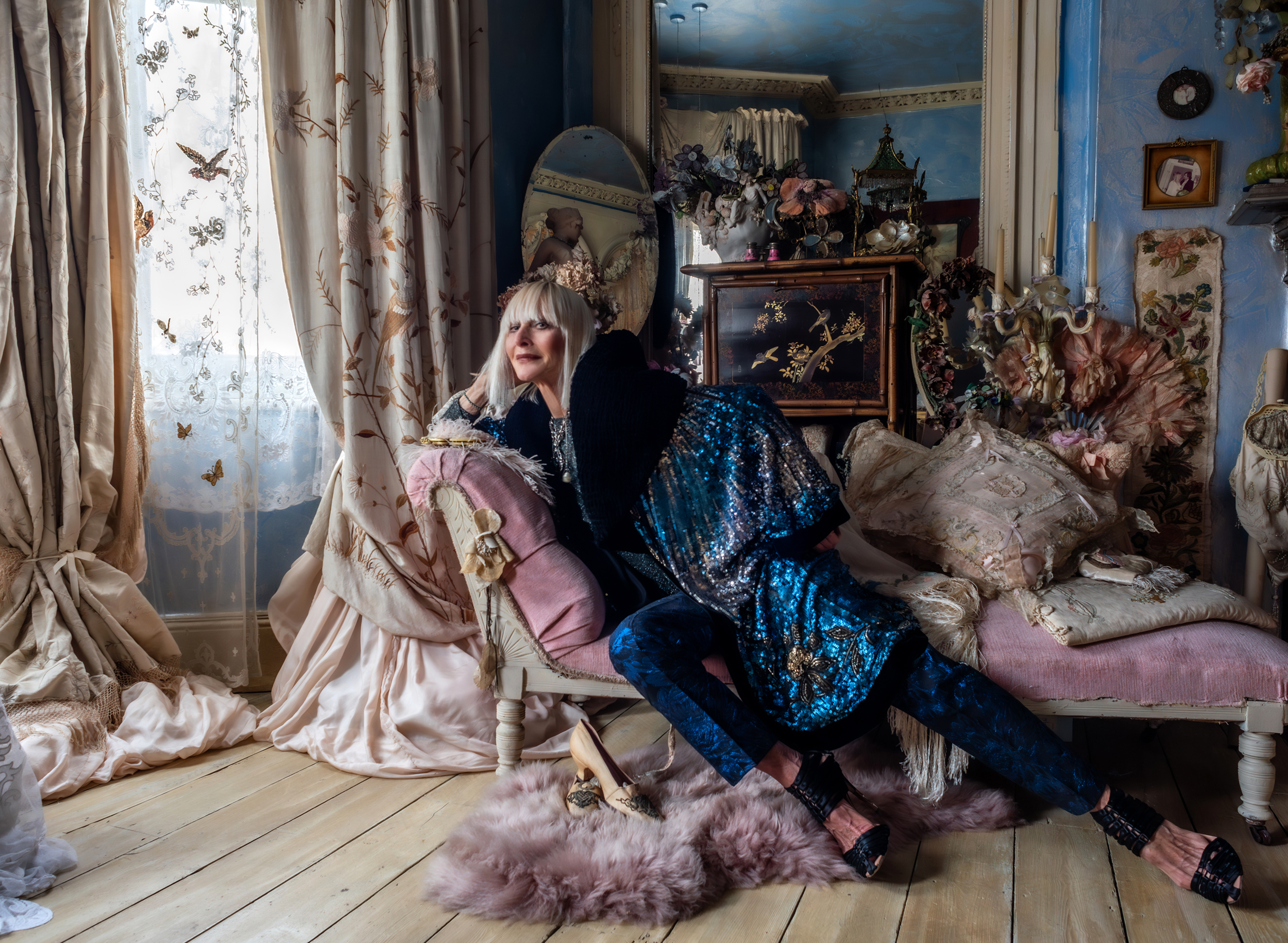
Virginia Bates at home in Chiswick
Some of the featured spaces are matter of fact and stark to the point that I’d call them modernist. Sculptor Lucille Lewin’s converted school in Marylebone, London, is certainly one, while interior designer Pol Theis lives in the kind of Manhattan loft that Adrian Lyne would consider a brilliant shooting location. But some, like Jane Wildgoose’s Memorial Library – which is also her home in a three-storey flat reached via an alleyway and a perilous staircase in her garden – need a map to navigate. Jane has made endless emergency repairs to the place (shortly after I shot with her for the book, a window fell out of one of the rooms), but its patchwork nature is apt for a place dedicated to archiving memory. Subscribers to Adolf Loos’s philosophy that ‘ornament is crime’ would be traumatized by its rooms, but to my eyes this is one of the most special homes in London, and one of the most beautiful.
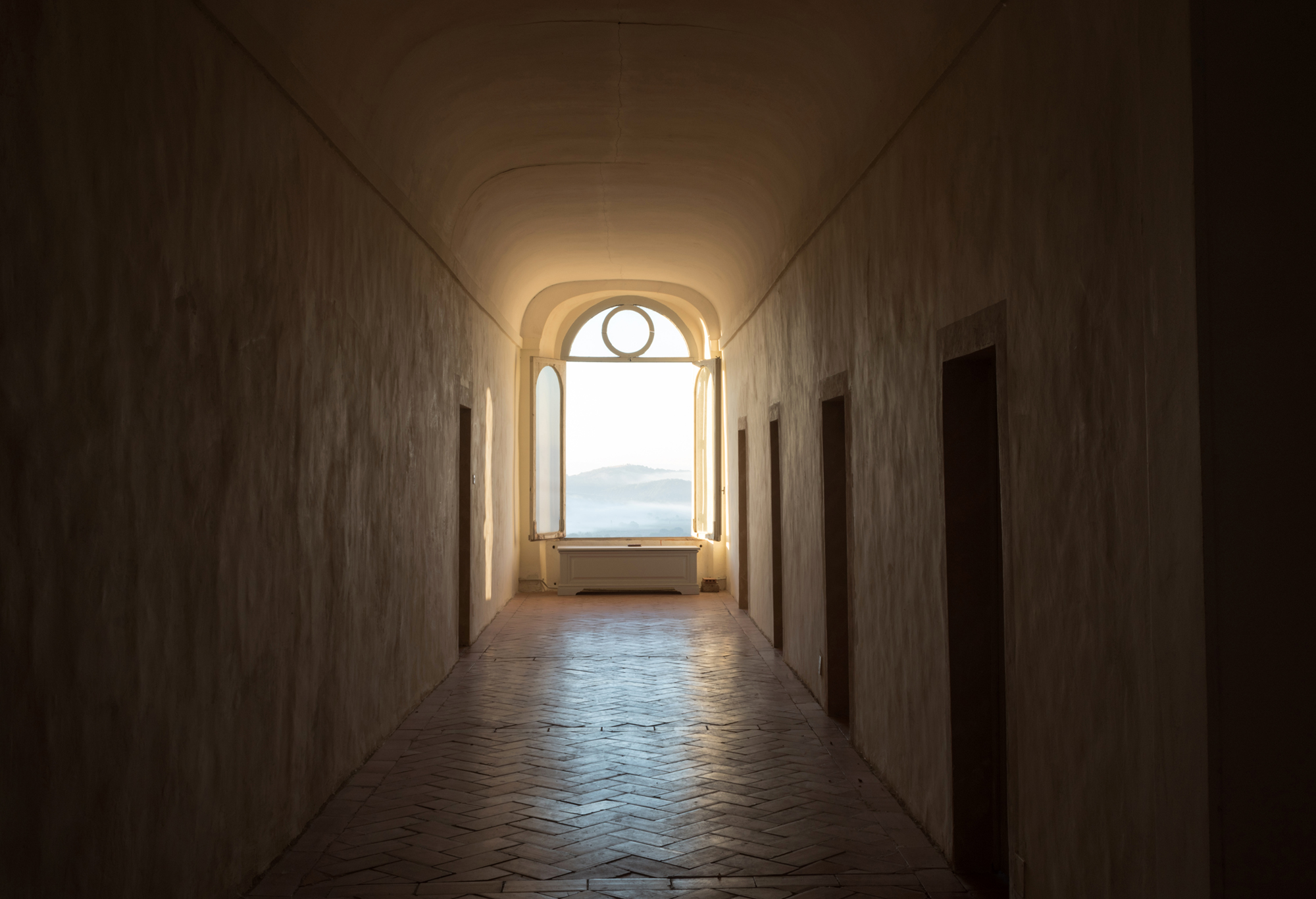
Emily Young’s home at the Santa Croce Monastery in Tuscany
There’s a growing trend for the outlandishly wealthy to buy a home as ‘turnkey’, which means that when they move in, everything from the Warhols and the Damien Hirst Spot Paintings to the white bouclé wool curved Yabu Pushelberg sofas and Aesop handwash is already in place, preselected for them. The subjects in Sanctum inhabit a different kind of universe. Some may be relatively wealthy, but all are discerning. They are exploring the possibilities of what it means to be an individual.
I first met Simon when he was an art director for fashion shows, including all of the early Alexander McQueen presentations
If one person could be singled out as the main inspiration for this book, it is Simon Costin. Each of the three houses he has lived in over the past decade is featured here, and I had been awaiting his most recent move – to a 16th-century house in Cornwall named Dockacre – to tell the whole story. I first met Simon when he was an art director for fashion shows, including all of the early Alexander McQueen presentations. We worked together for a period on other shows for London Fashion Week and stayed in touch, and I followed his work founding the Museum of British Folklore and taking over the Museum of Witchcraft and Magic with great interest. I had lunch with him the day he had been to see the first of the homes I shot, a Victorian terraced house in Hackney that, he announced, ‘currently belongs to a chick lit author and is painted entirely pink – I can’t wait to get my hands on it!’ It underwent a radical transformation. Every time I attended a party at that house, it struck me that it represented a unique way of living. It was holistic, a part of Simon’s canon – like walking into a dream he’d just had. His work has always been extraordinary: from pumping an acrylic water-filled runway with black ink and then making it rain for Lee McQueen’s September 1997 fashion show, to touring the country in a caravan painted with colourful fairground scrolls and filled with artefacts representing the history of British folk culture, everything he does comes from the same vivid imagination. For a while, I described the concept for Sanctum as ‘Simon Costin’s house, but lots of them’. Thus began a search to find people who had a similar approach to living.
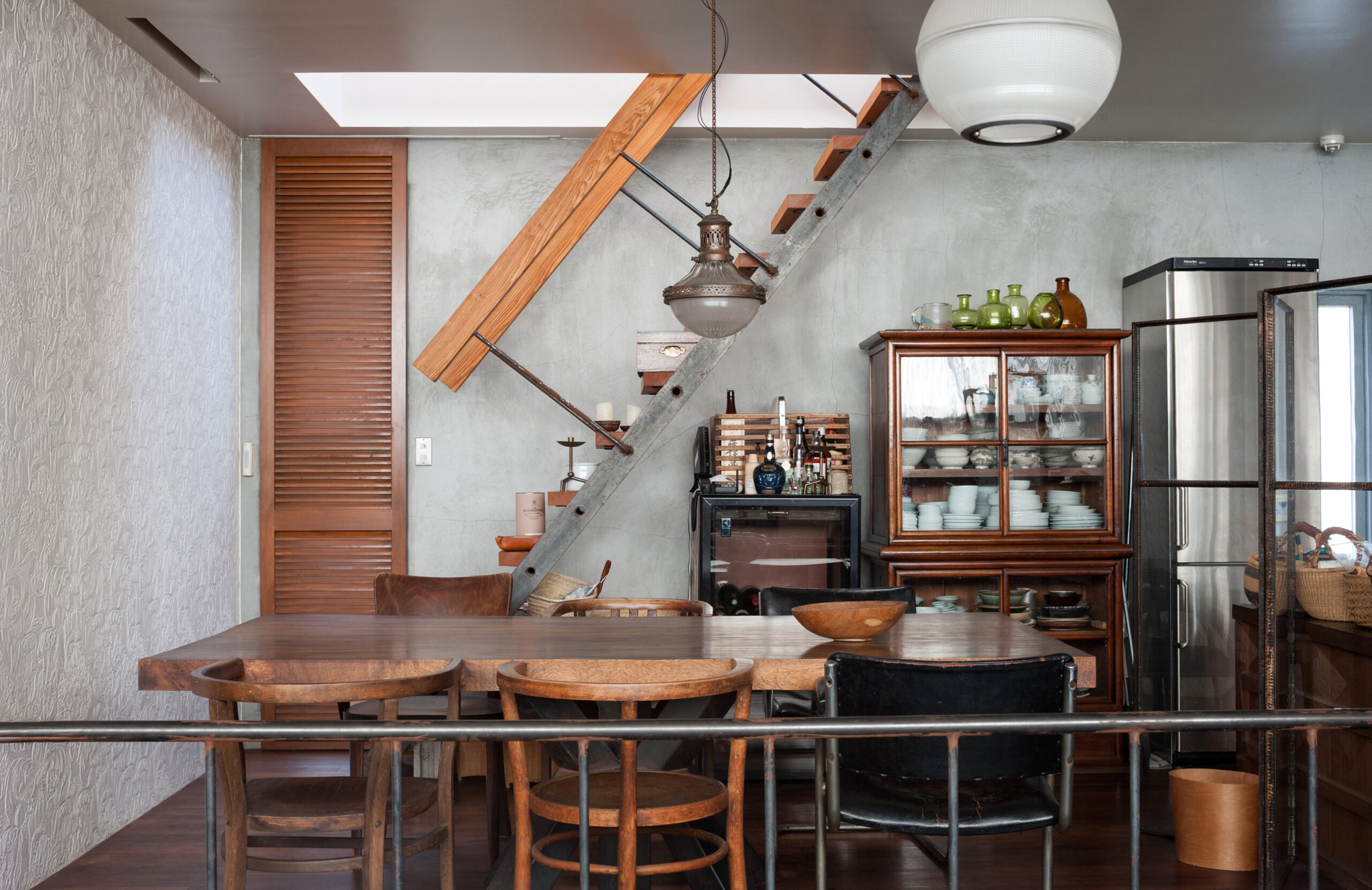
Sonya Park’s home in Tokyo
A natural choice was Detmar Blow, whose grandfather Detmar Jellings Blow – a disciple of William Morris – built Hilles House in Stroud, Gloucestershire, in 1914. Hilles has always been Detmar’s home and was where he lived during his marriage to the extraordinary fashion director Isabella Blow. ‘Issie’, as he still calls her, was renowned for discovering Lee McQueen (and persuading him to rebrand as the tonier sounding ‘Alexander’) as well as Philip Treacy, and frequently invited her acolytes to the countryside for retreats and inspiration. A troubled genius, she took her own life by drinking weedkiller at the house in 2007. Her spirit is still absolutely present in the house in the form of art and ephemera, but also in the way Detmar still lives – there is always a gathering, always laughter, and an ongoing rejection of the mundane.
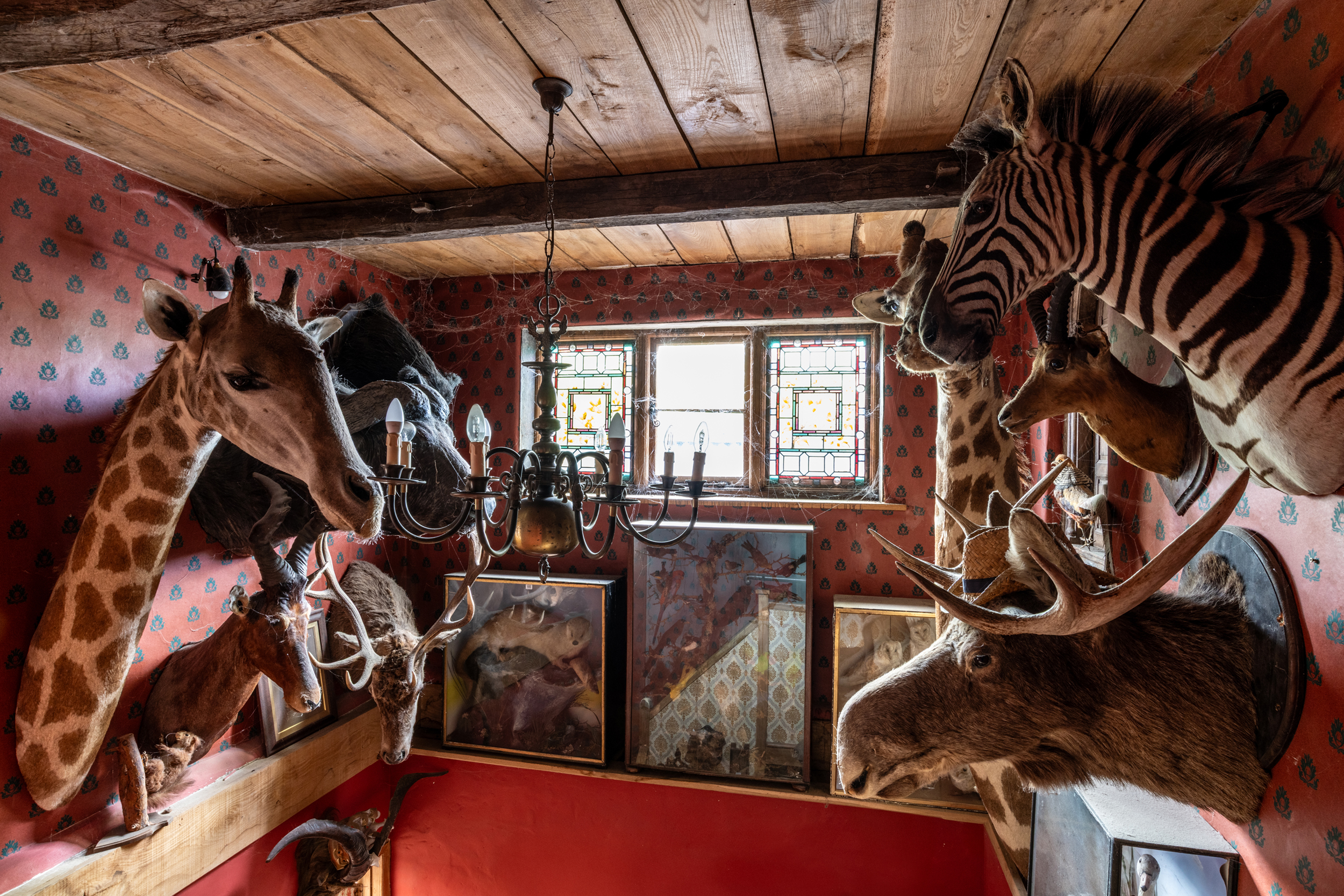
Interior designer Russell Sage’s home in Priddy, Somerset
I had already met a few of the other individuals whose homes became a perfect fit for Sanctum. They were in my personal orbit via connections made by like-minded artists and designers. There were also shoots in my archive that became an integral part of the project. All of them are notable, but some of the people who were generous enough to open up their homes to me are now gone, so those photographs feel poignant. I regard shooting and talking with the artists and designers Ruben and Isabel Toledo at their New York penthouse just over ten years ago as a career highlight. They represented everything that I thought was great about the city – two Cuban immigrants who met as teenagers, fell in love and shared their lives together. Each was one half of a bigger idea, and the work they created together was extraordinary, driven by their partnership. Isabel’s death in 2019 sent shockwaves through the community of which they had been part for so many years. There’s a far greater story to be told about their lives than I could ever capture in these images of where they lived and worked. But when I look at those spaces now, populated with the things they made, and the life they shared together, it looks like the sanctuary it was. Yes, it’s melancholy: time has passed, lives have changed. But there’s memory and feeling in every stairway, corner and shadow. Only extraordinary lives leave that kind of legacy. C
Sanctum: At Home with the Uncanny is published by Thames & Hudson